
Do you remember the first time you saw a cube watermelon? Did you marvel at the farmers’ wild ingenuity, or gasp at the outrageous price tag hanging from its perfect edges?
I remember my own first encounter clearly — those watermelons grown inside rigid molds from the moment they blossomed, forced to surrender every curve, every instinct to expand freely. Looking at them, I felt as if I were seeing the shape of a soul under pressure. And humans, I realized, are simply the grown-up versions of those cube watermelons.
From the moment we are born, we are placed into two invisible molds: an inner one scripted by our family’s DNA, and the outer one shaped by the expectations of the society and education. Our souls were meant to grow like wild watermelons — each with its own natural curves, its own untamed direction — yet bit by bit, we are pressed into a shape the world finds convenient: stackable, orderly, acceptable.
Parents and schools teach us how to say the right words, do the right things, become the right kind of person. We are rewarded for obedience, discipline, achievement — but rarely, if ever, encouraged to ask: “ What is my true shape?”
Education shapes our language, our morals, our systems, our culture. And so we learn to perform. We learn to tame our desires. Over time, we begin to believe that the cube version of ourselves — the one compressed into neat angles and clean lines — is who we truly are.
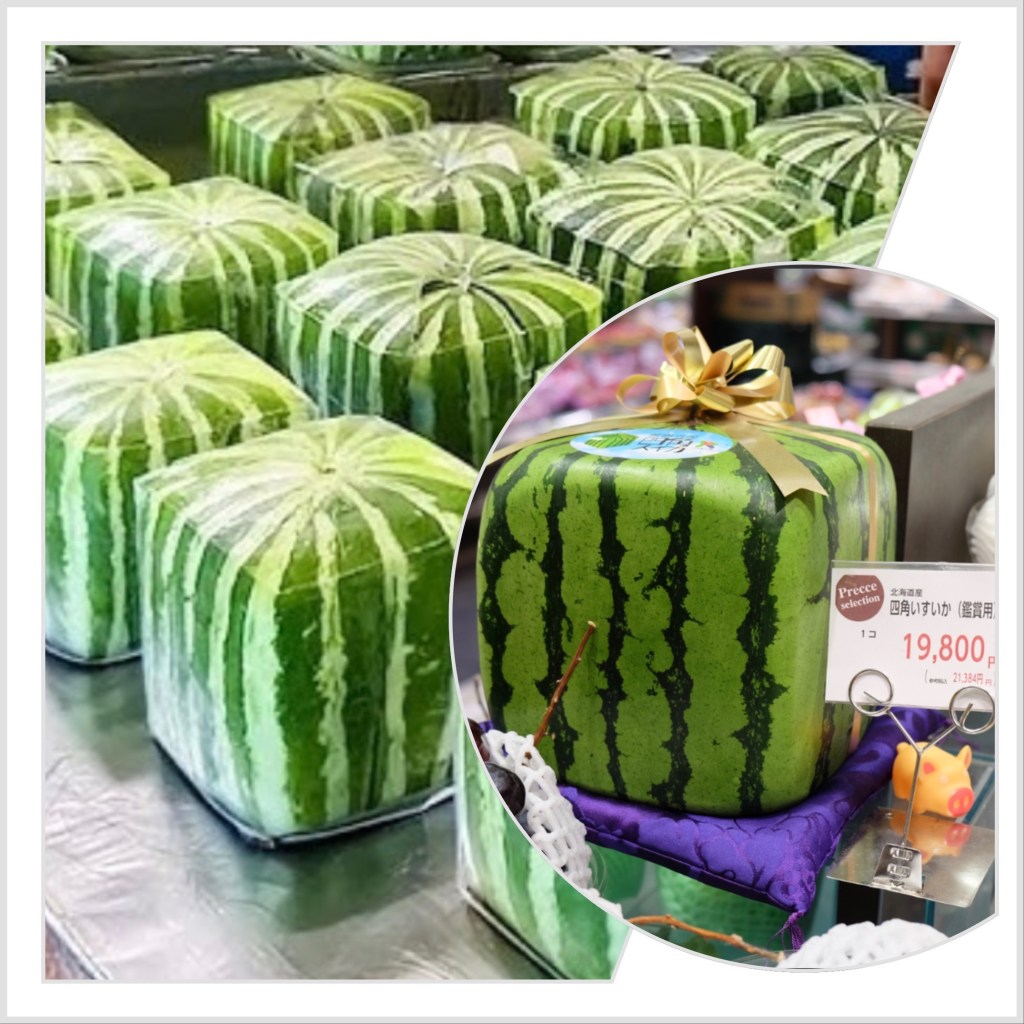
第一次看到那一顆顆開了花,就被養在模具裡,沒有任何曲線的方形西瓜,我彷彿是看到靈魂被壓抑的樣子。而人,就是『方形西瓜』的延伸版。

人從出生就被放進了兩層看不見的方盒:內層是DNA寫下的家族劇本,外層是教育與社會加諸的價值模具。父母學校教我們說對的話、做對的事、長成對的樣子。

我們的靈魂原本該是自由生長的西瓜,每一個都有它獨特的性格,卻被一點一滴塑形成社會可以接受的方形:整齊好疊放。
We practice saying the things we do not mean, until the performance sounds natural. And little by little, the unruly child we once were is sculpted into the “mature adult” society approves of — a perfectly formed cube watermelon.
But we forget this: being forced into a cube goes against the nature of a watermelon. The more perfectly cubic its shell becomes, the more its inner flavor fades. Its sweetness thins out, its essence turns vague — a fruit that looks flawless on the outside, yet tastes like nothing on the inside.
People become the same. Layer after layer, the persona masks we wear grow thicker, until the light of the soul can no longer pass through. And slowly, we lose our true flavor — a kind of inner distortion, a quiet suffocation that feels like living as someone we are not.
Some awaken through the pain in their bodies. Others are startled by the collapse of their own emotions. And a few, only when they hit the lowest point of their lives, finally hear that faint cry rising from the deepest chamber of the soul: Let me be free!
Jung tells us that the task of a lifetime is to bring the unconscious into consciousness, to live out one’s individuation. My understanding is this: it is the work of releasing the light of the soul from everything that has covered it, so it can shine again.
Cube watermelons may be praised as creativity, but to me, they are the silent cry of the human soul. They remind me that unless we become aware of the collective molds pressed onto us by society, our inner life can only suffocate inside a box.
Just like those rigid cubes — geometrically perfect on the outside, yet bland, diluted, even sour within — a soul forced into a mold may appear perfectly intact, while its inner light has long since faded and its voice fallen silent.
To live out individuation is not rebellion, nor is it obedience — it is not forcing ourselves into the molds society hands us, but bravely returning to the shape we were meant to grow into. It is giving the soul — the one that was never allowed to grow freely — a chance to finally become that it truly is.
Are you willing to break the mold and set your soul free?
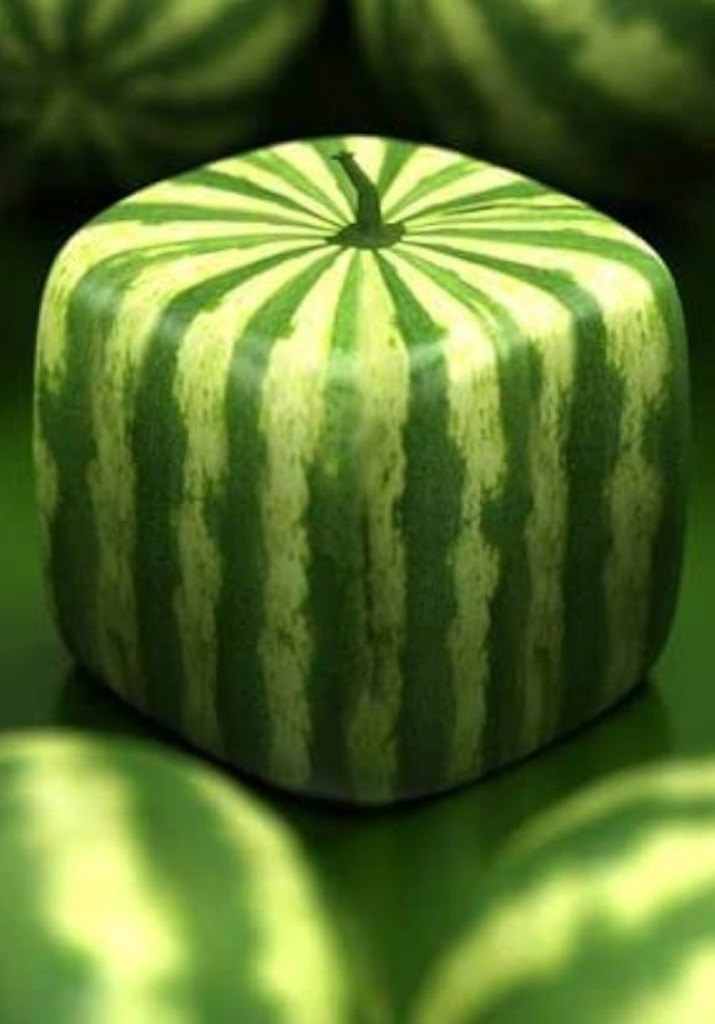
教育塑造了語言、道德、制度和文化,於是我們學會了表演、控制了渴望。久而久之,我們開始相信那個被壓成方形的自己,就是我們的模樣。

於是我們練習把言不由衷的話說得生動自然,一步步從小屁孩蛻變為『成熟的大人』,順利長成方形的西瓜。

但方形完全違反西瓜的天性,外表愈來愈方整,內心卻愈來愈模糊。角色面具愈長愈厚,那種「活著卻不像自己」的空洞感,逐漸籠罩全身讓靈魂窒息。
還記得第一次看到方形西瓜時的想法嗎?是對農民大開的腦洞感到嘖嘖稱奇?還是被它的驚天售價嚇到掉了下巴?
我還記得當我看到那一顆顆開了花就被養在方形模具裡、沒有任何曲線的西瓜時,彷彿是看到靈魂被壓抑的樣子,而人,就是方形西瓜的延伸版。
我們從出生的那一刻起,就被放進了兩層看不見的方盒:內層是基因寫下的家族劇本,外層是教育與社會加諸的價值模具。我們的靈魂原本該是自由生長的西瓜,每一個都有它獨特的性格,卻被一點一滴塑形成社會可以接受的方形:整齊好疊放。
父母學校教我們如何說對的話、做對的事、長成對的樣子。我們被獎勵乖巧、守秩序、表現優異,卻從未被鼓勵去問:「我真正的形狀是什麼?」
教育塑造了語言、道德、制度和文化,於是我們學會了表演、控制了渴望。久而久之,我們開始相信那個被壓成方形的自己,就是我們的模樣。於是我們練習把言不由衷的話說得生動自然,一步步從小屁孩蛻變為『成熟的大人』,順利長成方形的西瓜。
但我們忘記了,方形完全違反西瓜的天性,外表看起來愈來愈方整,內心卻愈來愈模糊。角色面具愈長愈厚,靈魂之光無法穿透,漸漸缺氧。因為靈魂知道自己不是這個模樣,那種「活著卻不像自己」的空洞感,逐漸籠罩全身讓靈魂窒息。
於是,有人在身體的疼痛中醒來,有人在情緒的崩潰中驚醒,也有人在生命的低谷裡,終於聽見那道來自靈魂深處的呼喚:讓我自由!
榮格告訴我們,人一生的任務是讓無意識(靈魂)變成意識並活出個體化。我相信他要我們認知到的是:讓靈魂被覆蓋的光重現。
方形西瓜或許被人稱為創意,在我的眼裡卻是人類靈魂無聲的訴泣,它們在提醒我,若不去覺察社會集體無意識塑形的控制,靈魂就只能在方盒裡窒息。正如那外表方正的西瓜,瓜肉寡淡無味,甚至發酸難以下嚥。靈魂被綑綁的人,外表看似完整無缺,內在卻早已失語無光。
活出個體化,不是叛逆任性,不是迎合他人期待,把自己硬塞在社會給我們的模具中,而是勇敢還原西瓜原本該長成的樣子。讓那個從未被允許好好成長的靈魂,有機會活出自己真實的面貌。
你願意掙脫模具,還自己靈魂自由嗎?
 Ayïma 阿儀瑪