Truth, Compassion, and Beauty
A Way of Breathing Through the Dark
I never joined the game called competition.
When the world shouted at me to win or lose, I simply watched the dust rise from the red dirt track, in silence.
They thought I ran for rewards. They thought I knelt to beg. But they never understood — in a world where fairness was never part of the rules, obsessing over victory was just another form of self-destruction.
I live for three things: truth, compassion, and beauty.
My pursuit of truth was almost instinctive. Knowledge became my only fortress. In the gaps between mopping floors, sewing garments, and scrubbing toilets, I memorized the periodic table and turned geometric proofs over and over in my mind. Not to earn a teacher’s praise. Not to prove that I was clever. But because truth itself does not change.
In a household ruled by uncertainty, mathematical formulas never lied to me. Atomic structures remained precise and certain. I studied because I wanted to understand how the world worked. I sought truth because, in a place crowded with superstition and prejudice, I needed ground that would not collapse beneath my feet.
Compassion was not a choice born of naivety. It was the result of seeing everything too clearly. Those who beat me, scolded me, belittled me — I came to understand that it wasn’t always malice. Often, it was their own pain looking for a place to escape.
I saw the scarcity behind my mother’s anger. I saw my grandfather’s helplessness after being cast aside by his time. I saw the numbness that had settled into my grandmother’s bones after being crushed by fate again and again. That kind of inherited sorrow and anger — it wraps around people like chains, passed down from one generation to the next.
But I do not resent them. I do not hate.
They had struggled too long in a world without light. So I made it my work to guard the small flame in my heart — to keep it burning, not just for myself, but to offer it back to them. I was willing to give away the better parts of me. Compassion is the dignity of my soul. Living it is how I end the transmission of pain.
And beauty — that was the way I stayed alive.
The piano was never a talent. It was oxygen. Through those thousand dark nights, reality was like a murky, suffocating sea: the stench of factories, the sting of mocking, the slow collapse of my own body — each one pulling me deeper under.
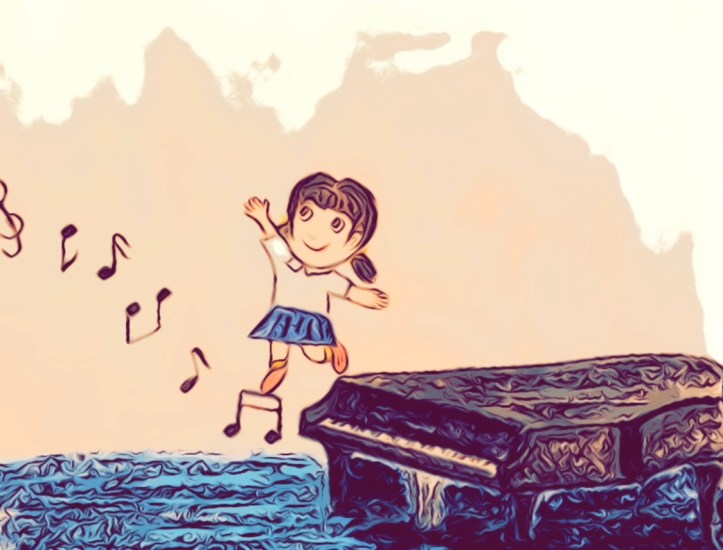
But the moment my fingers touched a key — even if it was only a silent keyboard drawn on the back of calendar papers — I broke the surface of the sea. I could breathe.
The pure logic of music, its harmonious order, was the only beauty in my childhood untouched by poverty. In the space where notes move freely, I was no longer a worthless mutt guarding the house. I was a person. I was whole.
In college, I fell in love with tennis. I was drawn to its strength and grace — the tension in every sprint, every turn, every swing, like painting a perfect arc with the body itself. Even when my days were consumed by tutoring and classes, even when my body was pushed to its limits, I would still head to the tennis court at 10PM to sweat under the floodlights. It was another way of breathing — a way to keep myself from being swallowed by reality. In the narrow spaces of a heavy life, I carved out a sliver of wind, a rhythm my body could still call its own.
I have walked a long road, one paved with dust and thorns, a pilgrimage through grit and blood. I don’t follow the definitions others tried to assign me. I’m not rushing toward a finish line named success.
I’m just here, through a thousand dark nights, playing out my truth — with bleeding fingers, again and again.
我對真的追求是本能。知識,是我唯一的護城河。我追求真理,是為了在被迷信與偏見佔據的環境中,找到一塊不會崩塌的立足之地。

我選擇善,不是因為天真,而是因為我看得太清楚。善是我靈魂裡的尊嚴,我活出它,是為了讓苦在我這一代,終止傳遞。

美,是我得以存活的方式,是我的氧氣。在一千個暗夜裡,在如深海般混濁的現實中,音符的流動,讓我得以短暫探出水面,獲得呼吸。
Prologue
I was once a child whose world began in silence, in a place where choice did not exist.
My life didn’t begin in a classroom, It began in the hum of sewing machines and the sting of cleaning chemicals. By six, I was stitching judo kimonos late into the night. By ten, I was scrubbing factory toilets before dawn, then rushing to school pretending to be just another student. But I wasn’t. I was a janitor, a garment worker, a girl holding up a crumbling home with nothing but threadbare willpower.
I learned early that life would not hand me a seat at the table. If I wanted a place, I would have to carve one.
These stories are records of hunger — in the belly and in the soul. They are stories of a girl who survived the dark by breathing through her fingertips, tapping out hope and harmony on a paper piano she drew herself. A girl’s longing to be seen. To be allowed to want more than survival. To love, to learn, to live with dignity.
You will walk with me through the shame of being called “disgrace,” through the ache of sleeping on someone’s living room floor. You will sit beside me at an international science fair, where I stood alone among confident students, grasping at a language I was never given the privilege to learn. You will see a girl who dared to teach even as she bled from the knuckles of poverty, who rose not from talent, but from sheer necessity.
You will also witness friendship, laughter, and secret codes between girls in my school. Teachers who handed me tools when no one else would. A friend’s mother who packed a lunch for someone else’s daughter. These acts of compassion became the light I carried through the dark winters.
I write not just for those who have walked the same road, but for anyone who has ever wondered whether they were allowed to dream beyond it. These are stories of choosing, again and again, to rise. Of carrying the wounds without letting them become walls.
This book is not a tale of victory, but of daring to walk forward when the ground keeps collapsing beneath your feet.
To the ones still sleeping on floors, still whispering their dreams to the night: I see you. This book is a lantern, lit from within, passed from hand to trembling hand.
May it find you.
Chapter 1 The Day I First Saw Words
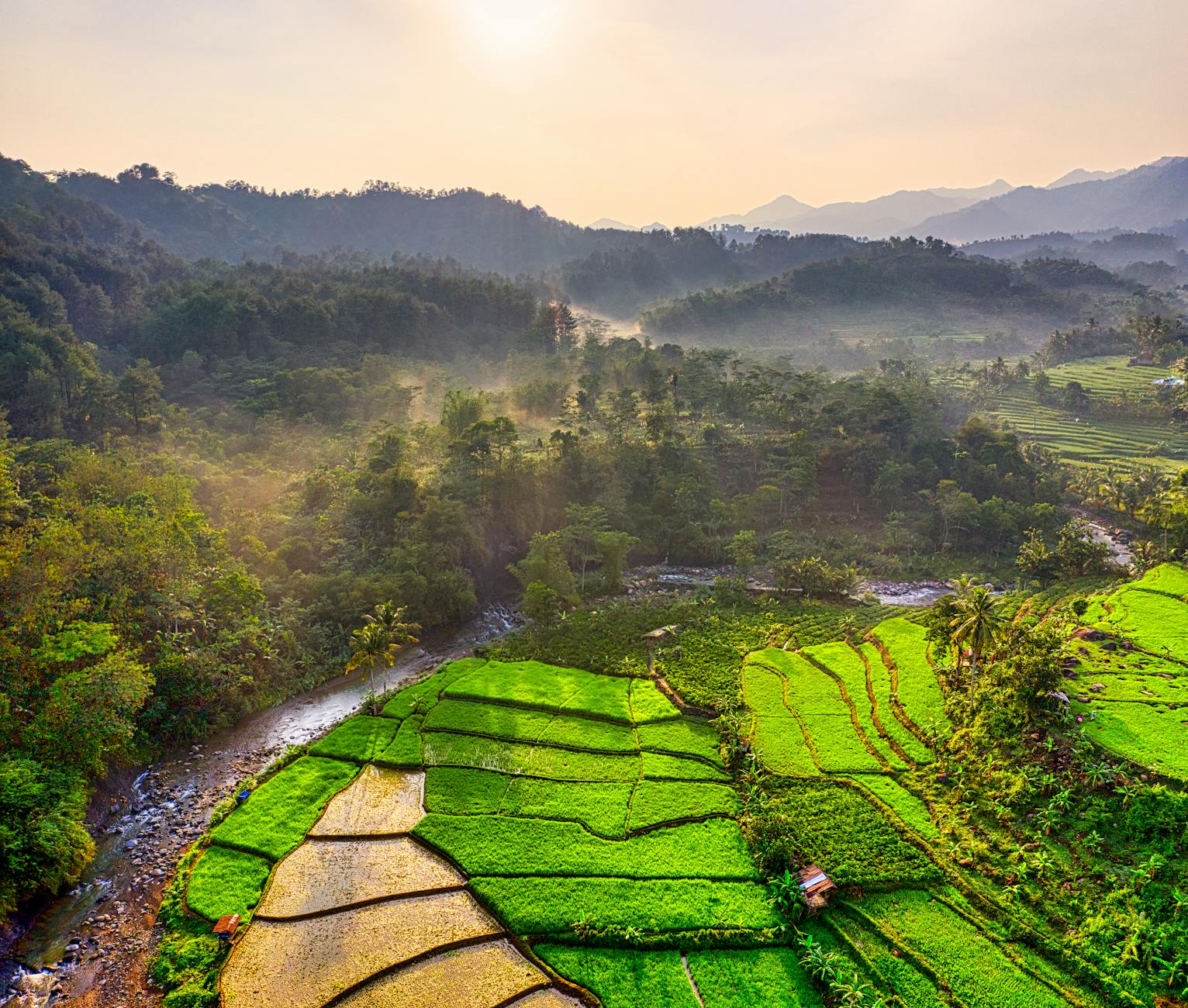
The year was 1985, in a farming village in Taiwan where life moved with the seasons. Women carried baskets of clothes to the riverbank, squatting on the rocks as they beat fabric clean with wooden paddles. By dusk, those same paddles would often vanish into children’s hands, repurposed into makeshift baseball bats as they played under the fading light.
Most families kept chickens or ducks scratching in the yard, and planted vegetables in narrow strips of soil by the fields or in patches of fallow rice paddies. The harvest was small but steady, enough to season the daily meals. Laughter and smoke from roasting sweet potatoes often drifted through the lanes.
But my family was different. We were the poorest household in the village. My mother, unable to read or write, bore the weight of raising two children and caring for her aging parents alone. My brother and I were among the only child laborers; while other children chased balls across the rice fields, we rose before dawn to assemble Christmas lights for pay.
Before I entered elementary school, my world held only one language — Hakka. It was a tongue woven with scolding and urgency, words rasping with the rough edges of emotion.
“Ayïma, bring slipper here!”
“Pork not yours, Ayïma. Take porridge!”
Ayïma was the hakka name my grandparents called me. The adults at home rarely spoke to me, and when they did, it was to command, to criticize, to complain. Nowhere in their voices could I find a gentle word to shelter my small, tender heart.
In that language, there were no stories, no lullabies, no words of comfort. To my young ears, language was nothing more than harsh noise — the byproduct of anger and endless labor.
I did not know language could take another shape, until the day I was six years old and walked into school for the first time. That was the day I encountered a book — a real book.
It was the Mandarin textbook, its clean pages uncreased, the black characters marching neatly across the paper, accompanied by bright, colorful illustrations. The teacher read aloud in a voice unlike any I had ever heard:
“The sky is so dark,
the wind so strong.
Father has gone to fish.
Why hasn’t he come home?”
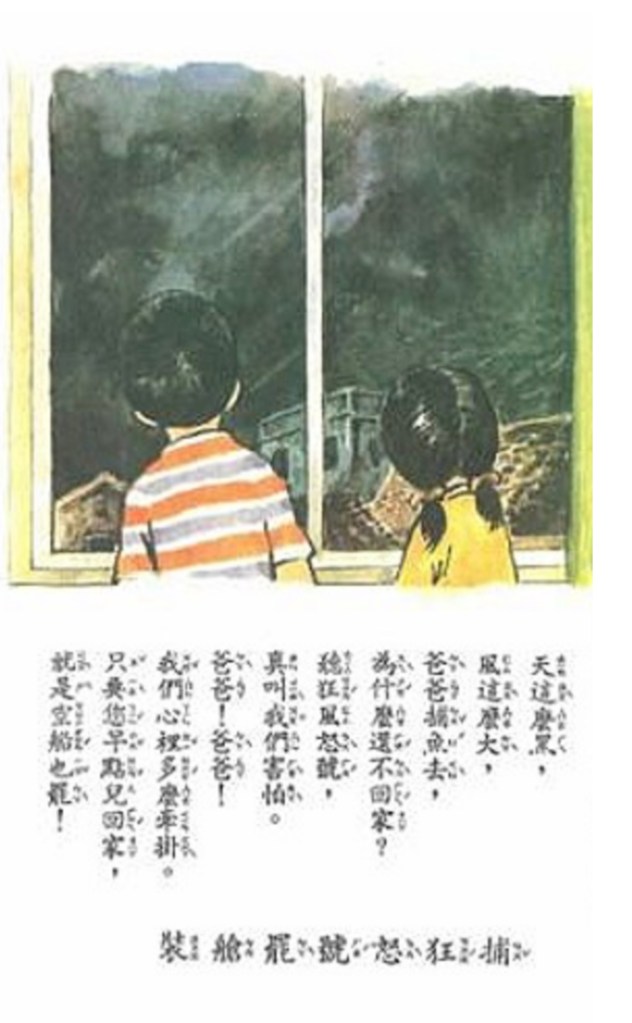
I sat frozen in wonder. Words could join together to form images, flowing with rhythm, simple and serene. I never knew language could be quiet, unhurried, unburdened by rage. A voice that gently drew pictures I had never seen before. That was the first time I encountered Mandarin.
It did not belong to my home, nor to me — yet I longed to learn it.
But I had never gone to kindergarten. I knew nothing at all. I couldn’t even recognize the phonetic symbols. During composition class, I often sat before a blank page, unable to write a single sentence. It wasn’t that I didn’t want to write — it was that my world was too small, my vocabulary too meager, the Chinese characters I could use too pitifully few… I… had no words.
And yet, I hungered for more. School became the thing I looked forward to each day, because I knew the teacher would speak new words, the blackboard would bloom with new characters, and the textbook would open to another untouched world. I was like a blade of grass waiting in the desert for rain, drinking in every drop of language I could reach.
Little by little, I began to memorize Tang Poems and learn the rhythms of Song Verses. I carried in my mouth the cadence of
“I raise my head to the moon’s clear light,
Then lower it, longing for home in the night.”
(床前明月光,疑似地上霜)
I absorbed the stillness of
“Plucking chrysanthemums by the eastern wall,
Serenely glimpsing the southern mountain tall.”
(採菊東籬下,悠然見南山)
Unlike the rough Hakka tongue that had shaped my preschool years, these Mandarin lines were like wind gliding over water, like moonlight spilling into dreams. Each word stirred ripples across the lake of my heart.
Language was no longer noise. It had become a key — one I longed, with all my small and stubborn mind, to hold.
Six years old — that was the year I first saw the shape of words.
And for the first time, I saw the soul inside me, longing to speak.
But outside the classroom, silence wore another name. It was not wonder — it was shame. And soon, the words I carried home were not poems, but tags and labels others carved onto my skin.
Chapter 2 Dignity or Dinner
Tags stuck to me, sharp as burrs on bare skin.
They weren’t whispered —
they were branded, loud and hot,
pressed onto my face like burning irons.


輕薄火辣的標籤,
一張張地烙上了我的臉。
走到沒人注意的角落撕下時,
字跡和紙渣卻早已滲進皮膚。
“There she is again, that beggar!”
A few classmates stood nearby, making sure their voices were loud enough for me to hear.
I kept my head down, pretending not to notice. I stood by the iron barrels where the classmates dumped the leftovers. With trembling hands, I scooped rice into a plastic bag I’d brought from home. The room filled with the sound of laughter — sharp, merciless, like stones thrown at my back. Everyone knew what it meant: I was the girl who collected what others discarded.
Quickly and carefully, I gathered all the rice, trying not to waste a single grain. I tied the bag up neatly, and tucked it beneath my seat to take home after school. In my mind, I was already calculating: in a few weeks, the chickens at home would be ready to butcher. Maybe this time, I could ask for a drumstick.
“Ayïma, the meat’s too tough to swallow for a girl. Just eat the skin,” the grown-ups always said.
I was small, they claimed, too young to chew through meat. Fat and skin were more suitable for girls like me. The tasty drumsticks always landed in my brother’s bowl. My portion was the skin stripped off chicken flesh. Most of the time, my food was the cloudy broth poured over a bowl of rice. No one explained this division. It was the order of things, as natural as sunrise.
Even Old Blackie, the neighbor’s dog, ate better than I did. His bowl carried meat, bones, pork fat and skin, scraps richer than my thin broth.
For as long as I could remember, I’d been alone. Every morning, the only visitor was the sun, peeking through the distant Dongyan Mountains, spilling light into our doorway for a brief moment. My most loyal companion was the Old Blackie himself. We often sat side by side, our eyes following the road where my brother and the other children marched off to kindergarten. Old Blackie never spoke, but his silence felt less cruel than the world’s.
“Worthless girl!”
That was the tag my grandfather slapped on me the day I was born.
“A mouth to feed and useless! Throw her out! See if anyone wants her!!” Grandfather had shouted, bound by the beliefs of an older Chinese era.
In our rural village, the rules were older than any of us. Boys carried the family name; girls carried only the weight of being someone else’s daughter-in-law one day. A boy was a seed for the future, a girl — an expense.
“She’s mine. I birthed her, I’ll keep her. I don’t care what you say. You can’t throw her out!!” my mother replied firmly, refusing to let go.
So the worthless girl stayed. And Mother was chained, from that moment on, to endless work.
“When can I be a boy?” I used to ask my mom, wide-eyed and hopeful.
I wanted to be a boy. Boys just had to frown to be pulled into someone’s arms. They ate whatever they wanted — no one said, “That’s too tough for you.”
“What you are’s what you are,” Mother would say softly. “You just take what you’re given.”
Even as a child, I understood my fate was like a stray dog’s. But I swore — if I had to be a dog, I’d be a good one. I’d be a useful guard dog.
So I began to overachieve. I brought Grandpa his cigarettes, brewed tea, fetched his slippers. I swept the floor, washed vegetables, did laundry for Grandma. I learned to sew to please my mother, and took plastic bags to school to ask for leftovers.
Soon, more tags stuck to me, sharp as burrs on bare skin:
“Mutt”
“Freak”
“Beggar”
They weren’t whispered — they were branded, loud and hot, pressed onto my skin like burning irons. And when I tried to peel them off, alone in some corners, the paper had already seeped too deep. My skin tore. The words stayed.
The thirty-minute walk home always felt too long — my fingers ached from carrying the bag of rice. But it also felt short — too short for me to swallow down the shame before reaching our door.
I often asked myself: dignity or dinner? I always had to choose the latter. Because dignity had never been offered to me. And hunger was something only I could quiet.
But maybe because my face was always covered with tags, I began to notice the ones others wore too. When a classmate was scolded for failing a test, I helped with their study if I could. When someone was left out, I sat beside them. Maybe I just wanted the world to be kinder to others — hoping, one day, the world might be kinder to me too.
I gave what I was never given, and in that giving, I secretly rehearsed the shape of dignity.
Hunger made its claim early. But before I even sat in the classroom, I had already learned the sound of the sewing machine — earlier than the laughter of children outside. That was how my childhood began: not with toys, but with work.
And yet, when I dragged my aching fingers home with the bag of rice, Old Blackie was always there by the door. He wagged his tail as if nothing about me was shameful, as if surviving was enough. In his warm gaze, I felt the only welcome the world knew how to give.
Soul Whisper :

I was called a mutt. Because no one knew who my father was. Because I collected the leftovers from other children in the school. In their world, a name was proof. A bowl of rice was proof. I had neither.

“Mutt” wasn’t just an insult, it is also a classification. It meant I had no origin worth mentioning. It meant if there was a bone left in this world, it would never be mine.

When others slap tags or labels on you, it’s to define you, to diminish you, to keep your head down. But you don’t have to follow their script. You lower your head only to see the road more clearly. You gather every grain of rice, and with it, your dignity.

Don’t let those words be your ending. You turned them into soil to let the labels grow roots — and from those roots, a spine, feathers, and finally, wings. Even if you were born in barren ground. Even if others called you useless, unworthy, forgettable — you turned every insult into lift.

So if you’re walking through darkness, remember this:
You are not the names they called you.
You are who you’ve fought to become.
You are the wing still forming beneath the label.

So don’t rip it off too quickly. It may be the very thing that’s about to carry you over the wall you thought you’d never climb.
Chapter 3 Open Window
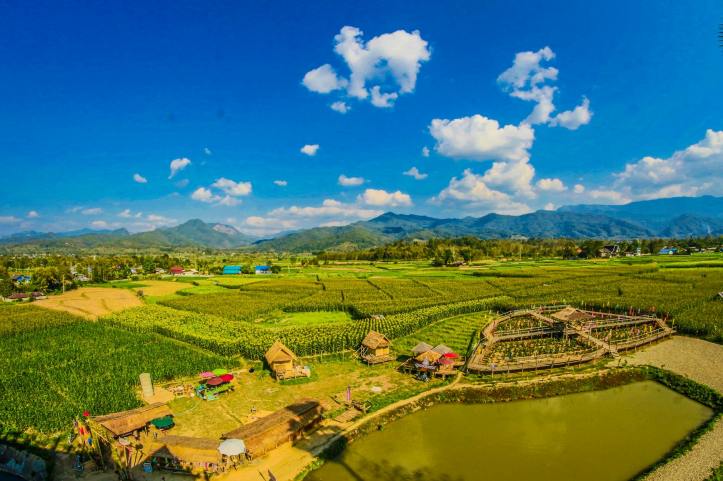
I always kept the window open.

Outside were endless rice fields, and beyond them, Dongyan Mountains.  It was a quiet, simpler time. After school, the road became the playground.

車衣服的時候,我總是開著窗。

窗外是大片大片的稻田,遠方聳立著東眼山。那是一個純樸的年代,放學後馬路就是孩子們的遊戲場。大家在馬路上打羽毛球、玩紅綠燈、做稻草人一二三。稻子收割後,便組隊在田裡打棒球,或起火烤地瓜和麥芽糖。
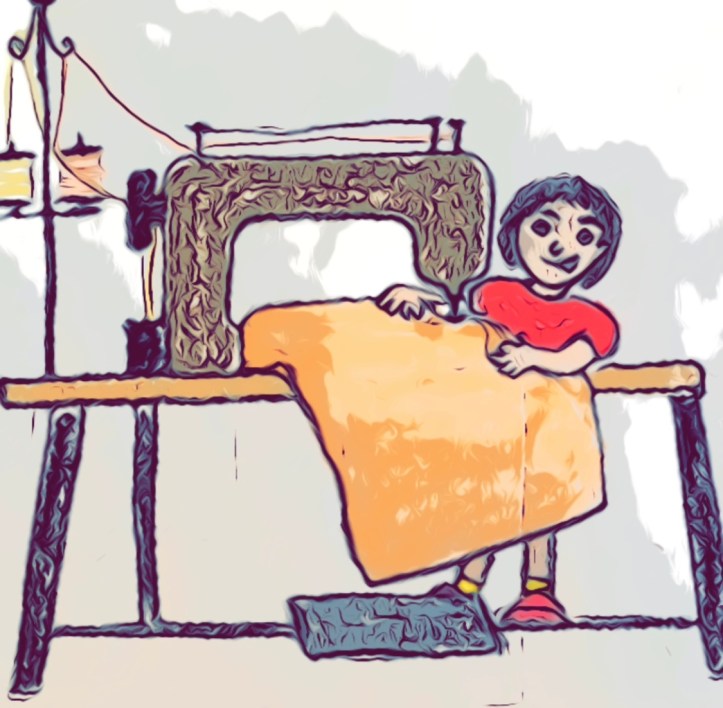
Before I began school, Mother worked from home, stitching judo kimonos for a factory. In Taiwan then, there were no public kindergartens — every one was private and costly. Because I was the worthless girl, no one thought it worth the money to send me to kindergarten. So I stayed home, watching Mother work.
With my little eyes, I studied how she threaded the needle, pressed the foot pedal, aligned the cloth. I learned by watching, quietly, carefully.
Once I started elementary school, Mother went to work at the factory. After school, I tried the sewing machine, out of curiosity, and out of a desperate need to prove I was useful. I wanted to be a good dog. A guard dog they wouldn’t throw away.
Surprisingly, my work passed factory inspection. I could earn money.
I took a secret pride in being a “useful” dog. To my six-year-old eyes, the sewing machine was a magnificent toy — a sleek and powerful beast that no other kid dared to touch. I became a local wonder. Neighbors would crowd around our doorway to watch my small hands command that industrial machine. Had a reporter passed through our dusty lane in those days, I surely would have been the headline of the Sunday newspaper.
But what started as pride quickly became pressure. Because once you can make money, it’s no longer a game.
My mother began setting daily quotas. If I didn’t finish, there would be bamboo stick punishment. When the factory rushed orders, school came second — I stayed home to sew. Gradually, weekends disappeared. Holidays too. Every day of the year, I sewed. Labor filled the hours. Lessons, if any, came after.
What began as play turned into a nightmare. I often wished to wake up from it — but the dream dragged on, all the way through the last year of my middle school. I still remember reciting the ancient Chinese ballad of Mulan — “click-clack goes the loom" — feeling it in my bones.
The sewing room was a tiny, three square meters space. Just two machines and baskets to hold judo kimonos. My machine sat by the weathered red wooden door with peeling paint, beneath a window that faced the road.
I always kept the window open.
Outside were endless rice fields, and beyond them, Dongyan Mountains. It was a quiet, simpler time. After school, the road became the playground.
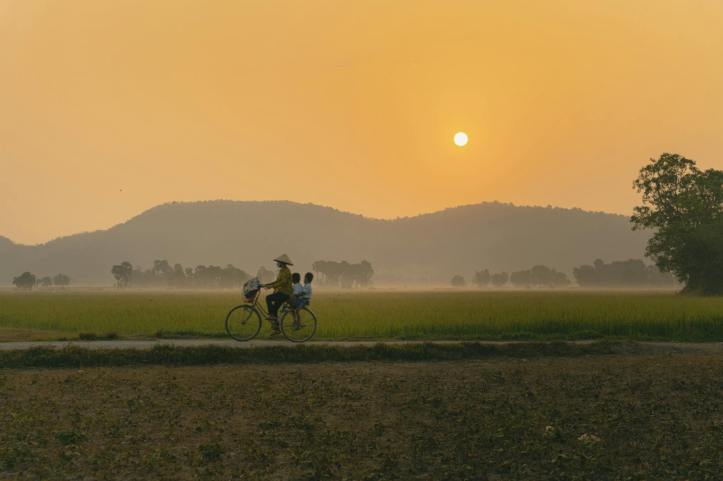
Kids played badminton in the open lane,
chased each other through make-believe games.
With “red light, green light!” —
freeze, then dash,
muddy heels in a wildgrass flash.

After harvest, they'd take the rice field —
turn stubbled ground to a baseball shield.
When the sky turned gold,
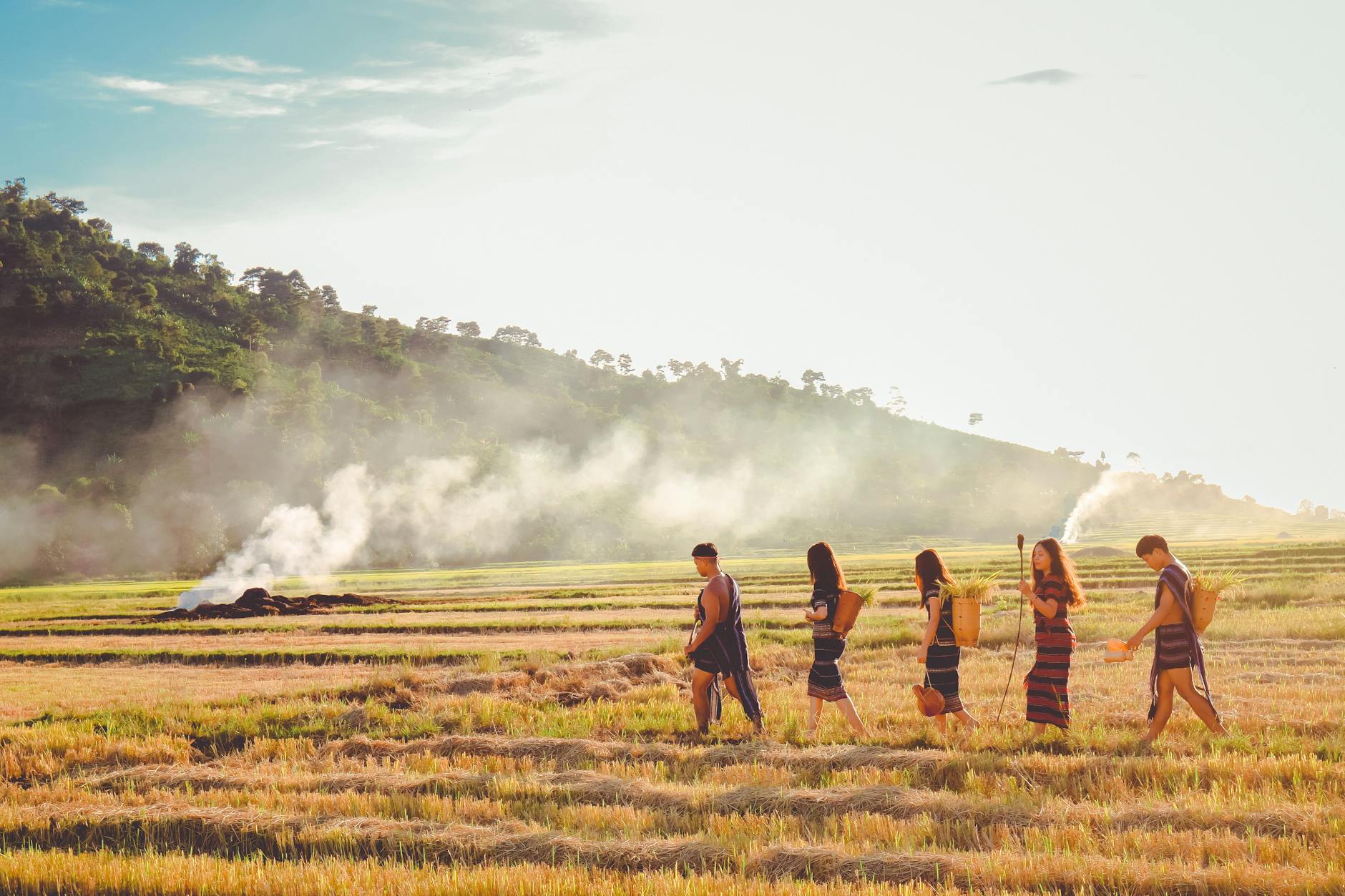
they lit small fires, let stories unfold.
Sweet potatoes charred in smoky rings,
malt sugar stuck to dirty hands like dreams.
Even in winter, I left the window open.
While my hands stitched fabric, my mind wandered outside. I listened to the kids’ laughter, their swear when sweet potatoes burned.
They laughed, and I laughed too.
They cursed, and I echoed a word or two.
As if I were standing by the fire’s glow,
On the ridge where the warm winds blow.
As if I had tasted, on my tongue,
that scorched malt sugar the children sung.
What was a happy childhood?
Things I glimpsed through that window —
barefoot baseball in the meadow,
chasing crickets in fields of gold,
faces smeared with dust and laughter bold.

Was this the shape of a carefree childhood?
Or was it meals and music, brush and board —
a life where every path was yours to afford?
For me, it was only a tale told from afar — A glimmering vision through the window’s bar.
聽著大家玩鬧的嘻笑聲,
地瓜烤焦後的咒罵聲,
他們笑,我也笑,
他們罵,我也跟著唸兩句。
似乎,我就站在火窯旁的田埂上。
似乎,我也嚐到了那微焦的麥芽糖。

無憂無慮的童年,
究竟是怎樣的一種生活?
是我透過窗,看到的景象嗎?
是光腳打棒球、捉蟋蟀,
玩得灰頭土臉?
還是每天吃飽喝足,
琴棋書畫,任君選擇?
As the “unwanted girl" of a single-parent home, I had real worries: Could I pay for next month’s lunch? When would I have time to do homework? Would I be beaten again if I fail to fulfill my work quota? Could I go to school tomorrow?
My days unspooled like a black-and-white reel of exhaustion and ache, as I sewed from dusk till dawn. But… I always kept that window open.
Soul Whisper:
In all the hardship, I kept my window open. Through that narrow frame, I saw a world I didn’t yet belong to, but longed for — a world full of light and freedom.

I was then just a little girl bent over a judo kimono, but that sewing skill — the very thing that once tormented me — would later become the backbone of my survival. Looking back, I see that what I thought would break me, built me instead. The sewing machine chained my hands, but I had the heart of someone reaching for the stars.

So if you’re standing in a small room, your back aching, your life threadbare — leave your window open. Let the wind carry your dreams farther than your feet can go. What you see outside may not be yours yet, but it can become yours.

Let the world whisper back.
Chapter 4 The Tears of Faucets
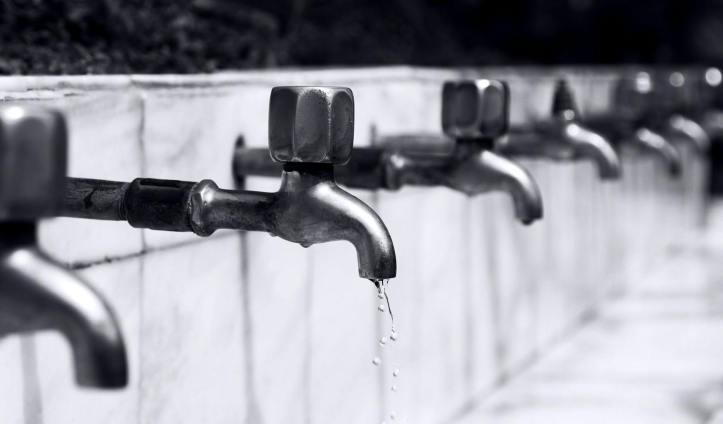
Those thirty minutes of lunch felt like a century.
Most of the time, I stood by the faucets
and watched the water
drip,
drip,
drip...
they looked like tears...
no one bothered to wipe away...

“Don’t cry. I’m here for you,”
I whispered to the faucets.
“Go wait in the hallway. Don’t stay in the classroom and disturb the others while they eat,” Ms Tsai said in front of everyone.
Ms Tsai, our homeroom teacher, was an elderly woman, close to retirement age — the kind of strict, old-fashioned teacher who believed discipline was the only true education. To her, order mattered more than hunger. Rules were rules, and pity was weakness.
Our elementary school had more than three thousand students. A city within a city. Rows of identical classrooms, each one filled to the brim. Each classroom opened to the hallway, where a row of faucets lined the wall — ten to a class, endless down the corridor.
Everything was fixed: the classrooms never changed, and every student had a seat that stayed the same the whole year. That desk was our little island, where we studied, doodled, and at noon, turned it into a dining table.
The school had a central kitchen that cooked fresh meals every morning. At lunchtime, steaming pots of rice, barrels of meat with vegetables and soup were delivered to each classroom. The smell spread through the hallways long before the bell rang, making every stomach twist with anticipation. Children lined up with their metal trays, waiting their turn, before carrying their lunch back to their seats. It was always hot, always balanced — rice or noodles, three side dishes, and soup.
A small luxury every child could count on.
Every child, except me.
Because I didn’t pay the lunch fee, I wasn’t allowed to join the line, nor sit at my desk with the others. The rule was simple and merciless: “If you didn’t pay, you don’t eat.” And Ms Tsai made sure of it. Every single day.
The moment the food carts rattled into the room, her eyes would sweep toward me. Then came the sentence I dreaded most: “Go wait in the hallway.”
A ripple of giggles always followed, light and cruel. My face burned as I stepped outside, the classroom door clicking shut behind me.
From the very first week of first grade, I had been labeled troublemaker. Not because I misbehaved — but because I was poor. I had never gone to kindergarten. I didn’t know any of the Chinese phonetic symbols. I never had money for lunch fees, never brought a single coin for field trips or class donations. Anything with a price tag excluded me. And in the teacher’s eyes, exclusion meant defect.
But I loved school. To me, the campus was a paradise: swings soared like wings, slides polished by a hundred joyous descents, and the soft fabric of the navy pleated skirt brushed against my knees.
For the first time in my life, I had something that was mine alone — a uniform with my name stitched in clean characters. I wore it with reverence. Because with it, I wasn’t the worthless girl in hand-me-downs. The uniform made me like going to school.
沒交午餐費,
每天的午餐時間總是無比煎熬。
站在教室外的走廊,
咖喱雞或八寶飯的香味
瀰漫在學校的每一個角落。
我的口水不受控制,泛濫成災。
肚子也鼓聲大作,
在裡頭磨刀霍霍。

三十分鐘的用餐時間,
都像是一世紀那麼長。
大部分的時候,
我就靜靜地站在洗手台邊,
看著水龍頭的水一滴一滴地滴落,
好像默默滴下的眼淚。
However, not paying lunch fees made lunchtime torture.
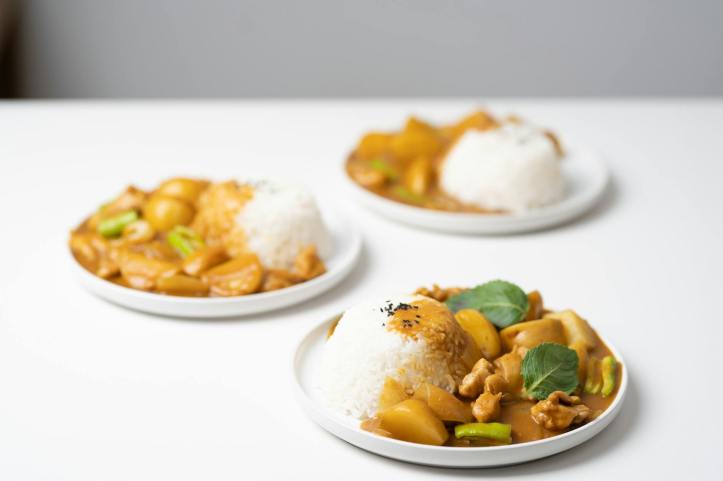
Standing outside in the corridor, the smell of curry chicken or orange-pork would seep into every corner of the school. My mouth watered beyond control — a flood I couldn’t hold. My stomach roared like thunder, sharpening knives in the dark below.
Those thirty minutes of lunch felt like a century. Most of the time, I stood by the faucets and watched the water drip, drip, drip… they looked like tears… no one bothered to wipe away…
“Don’t cry. I’m here for you,” I whispered to the faucets.
One day, I was too hungry to bear it. I walked to the second-grade classroom section and found my brother.
“Brother, I’m so hungry. The noodle soup today smells so good…”
That day’s lunch was meat noodle soup and a cupcake.
He led me to the faucets, turned the water on, and said to me, “If you’re hungry, drink it. If you’re still hungry, drink again and more. Fill your belly with water and it won’t hurt anymore. Got it?”
It was his way of teaching me how to survive.
So the faucet’s tears, their sorrow, drop by drop, all flowed into my stomach.
When our first report cards came out, I was ranked second in my class. I got a certificate, a cupcake, and — most shocking of all — praise from Ms Tsai. It was the first time in my life a teacher had ever said something kind to me. I felt school was not pushing me away but drawing me in.
But whether or not I could go to school wasn’t up to me. If the factory had rush orders, I had to “get sick” and stay home to work. The sound of sewing machine filled those days — “click-clack, click-clack” — as I pushed judo kimonos through the machine, riding that iron beast like a soldier riding to war.
At six, I didn’t understand why my mother needed me to work so much. But I wanted to please her as much as I could. Back then, Mother was the only warmth I knew in this world.
Was that love? I wanted it to be …. with every bit of my hungry and trembling heart.
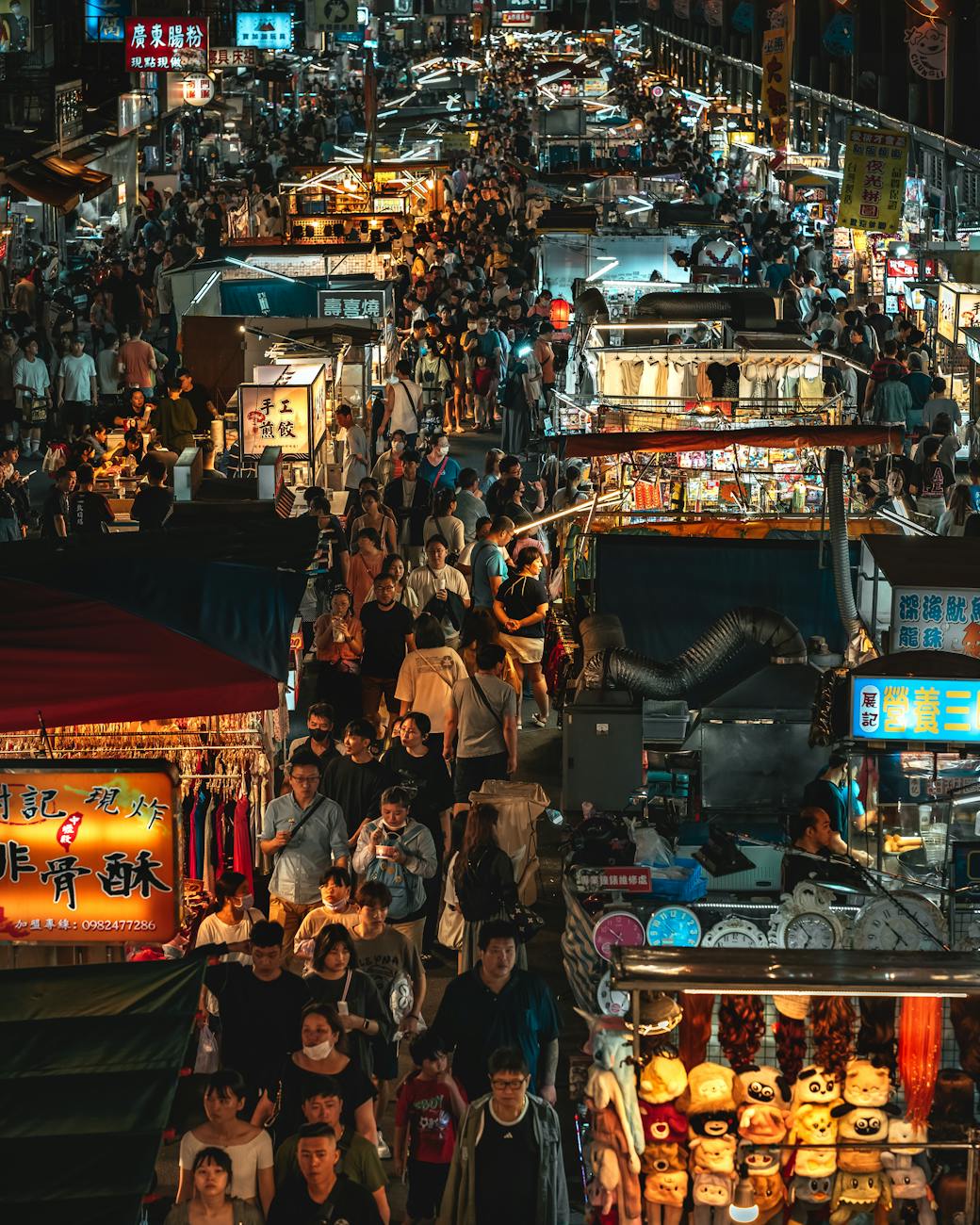
The final term of the first grade I got the best scores of the class. Mother decided to treat Brother and I to something special on her payday. That evening, she took us to the night market. This was a reward not only for my good grades but also for the daily work we did to help ease her burden.
The night market was a wonderland to me. Everywhere I looked, there were lights, colors, and smells that pulled me in all directions. Food stalls sizzled with fried chicken, green onion pancakes, and skewers dripping with sauce. Candy-colored toys and beautiful clothes spun under bright lamps. It was a world far from our plain dinners and worn-out clothes.
Brother and I finally settled on a steaming bowl of vermicelli. We shared it, leaning over the bowl, slurping hungrily until only the last drops of soup were left. I realized Mother didn’t take any bite.
“Mom, you want a bite?” I quickly asked.
“No, no. I’m not hungry. You guys go ahead. Finish it,” she looked at us with a smile.
Mother was not hungry. She was never hungry.
Mother had never been to school. With no education, her hands became her only credentials. She worked as a tea picker in the mountains, sewed clothes for pennies, sold vegetables by the roadside, and cleaned restrooms — whatever work could keep us alive.
She always told us, ”These jobs are filthy work, but the money’s honest. We sweat for every coin. It’s hard, but when we spend it, we don’t owe anyone shame.”
“Our palms should face down, not up,” she would repeat, meaning we must always give rather than ask. That’s why she never walked past a beggar on the street empty-handed, always dropping a few coins into their bowls.
In our household, the number-one principle was making money: every minute of spare time should be used to work. The second was saving it. Nothing was too small to reuse, nothing too broken to repair.
We grew our own vegetables, raised our own chickens, carried cement and bricks with our bare hands to patch up the house. Old clothes from Mother’s coworkers became our wardrobe, discarded fabric scraps from the garment factory were stuffed into cloth covers to make our quilts. We even ate watermelon rinds from neighbors. The list of saving hacks was endless.
Yet, when it came to her parents, Mother never hesitated to spend. She bought them a television so they wouldn’t feel lonely, and a small portable heater so Grandpa wouldn’t freeze through the winter nights.
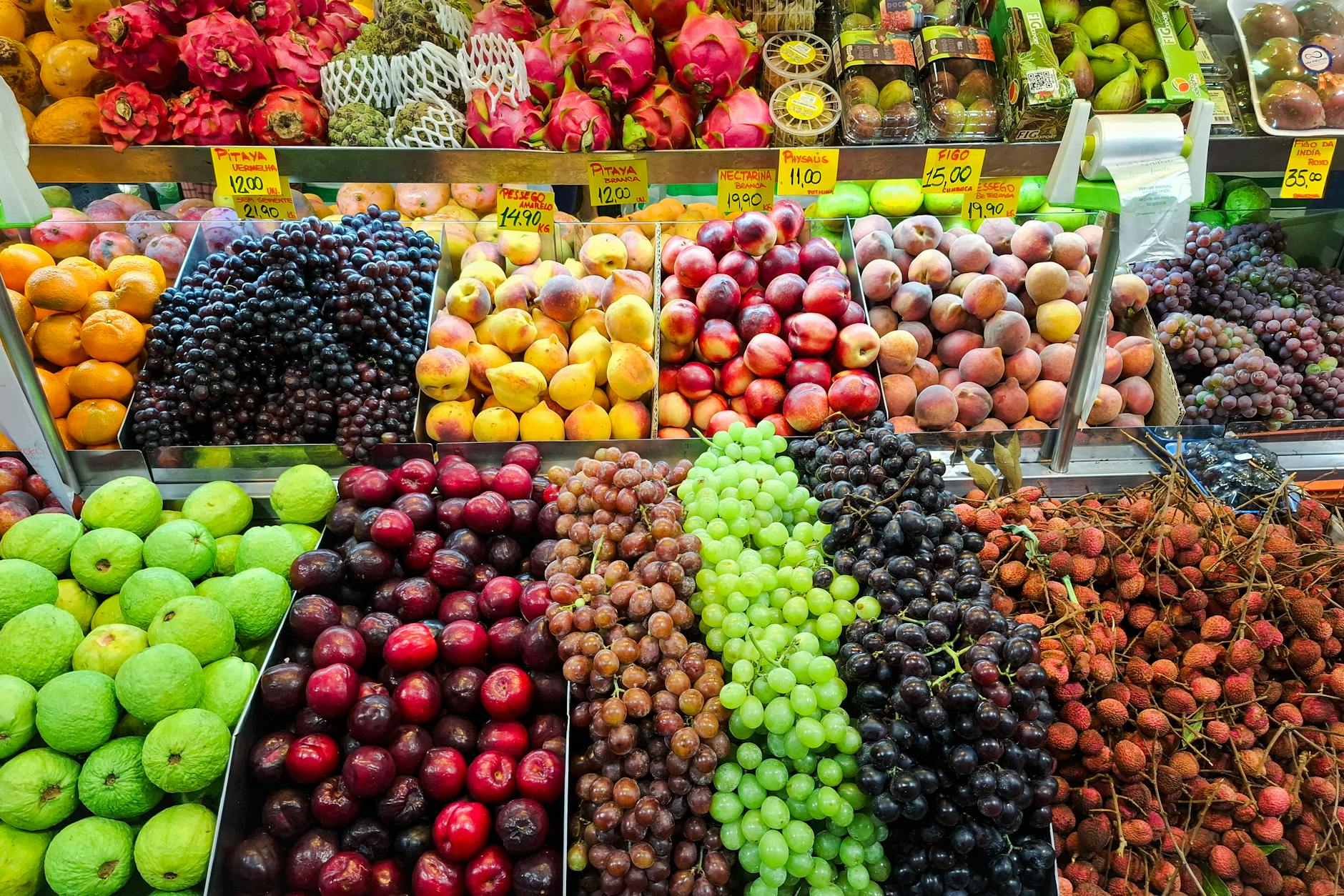
That evening, after finishing that bowl of vermicelli, we passed a fruit stall gleaming with California plums and nectarines — imported fruits so bright, so colorful, so fragrant, that Brother and I couldn’t help but stare. They looked like treasures from another world.
Mother hesitated, her gaze hovering over the pile of shining fruit. Finally, she picked out two plums — deep purple, their skins polished to a shine as if someone had rubbed them with velvet. She weighted them in her palm as if they were made of gold.
The vendor dropped them into a plastic bag, asked, “Only two?”
Mother gave him a quick smile. She pressed the money into his hand and hurried us away.
When we were a few steps off, she whispered softly: “These are too expensive. We’ve already spent too much today — the bus fare, the noodle, and now this. I couldn’t buy more. These are for Grandpa and Grandma. If they ask, tell them we ate our plums on the way home, alright?”
We nodded. I asked to carry the plums. The sweet fragrance floated up, rich and tempting, made my mouth water.
As we walked from the bus stop to home, the two plums glowing like dark lanterns in the dusk. Their perfume followed us down the dirt road, stronger with each step, so intoxicating. I felt giddy with happiness. We had gone to the night market, eaten oyster vermicelli, and now with this magical fruit in my hand. I wanted to remember the taste of that soup, the smell of the plums, and the pocket of happiness on this night.
“It’s gone……” Mother’s voice cracked with despair.
“My pay envelope… it’s stolen!” she began to cry — loud, broken sobs tearing through the night air.
I froze, unable to move. The joy collapsed inside me. My heart sank with every sob that tore from Mother’s throat. I thought of the three of us, laboring day after day for an entire month, and of the month ahead — how we would survive it now, with nothing left.
I thought of the lunchtime torment that would return to me at school, the smell of food that I could not touch, and the tears of the faucets I had to swallow.
I lifted my head and looked at the sheet of black, merciless and vast sky. My tears slid down silently. Why?! What had we done wrong? Why could we not even have one night of happiness?
People say that suffering builds strength. Can bitterness, if swallowed long enough, turn sweet?
I don’t know, but I sincerely hope so, hoping that somewhere, beyond the sound of dripping, the world is listening. And one day, not every tear will have to be swallowed.
Soul Whisper:
What my mother gave me back then was not comfort, not warmth, not even enough food. What she gave me was something fiercer: the refusal to be abject.

She taught us that our palms should always face down - to work, to give. She believed that even the poorest hands could hold their heads high if they worked honestly. That filthy hands could still lift a clean heart.

When I stood alone in the corridor, swallowing the tears of faucets, I knew something very important: Hunger may empty my body, but it would not empty my soul. I would keep my head high!

It was the shield she handed me — against a world that often takes more than it gives. And I still carry it with me, deep in my heart — the dignity of labor, fierce and unbroken.
Chapter 5 A Day of Light
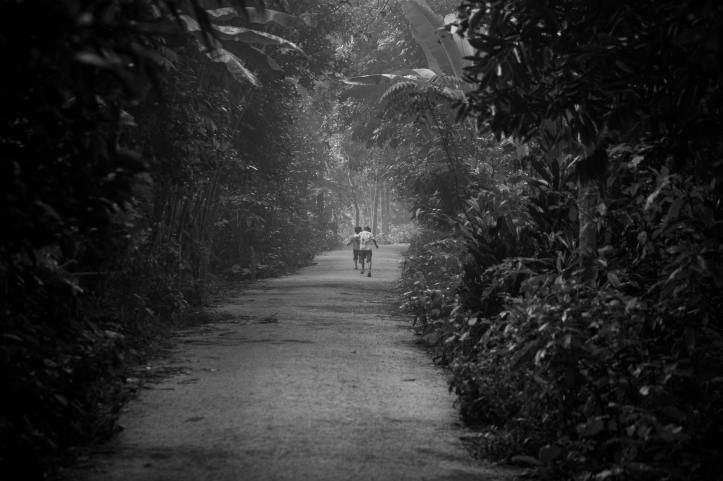
約一公里長的平德路,
兩側散布著一叢叢的竹林,
被打斷的竹條,
馬上就有了替代品。。

我不知道竹條究竟打斷了幾根,
也不知道,
回家的路竟然可以如此漫長。
I stared at a feather-shaped cloud in the sky, head tilted high, eyes wide open. I didn’t dare blink — afraid that the moment I did, my tears would break loose.
We walked down a country road lined with bamboo groves. My mother gripped one bamboo cane, the most common tool for discipline in Taiwan, in her hand and swung as she walked, striking my legs with every few steps.
Pingde Road stretched nearly a kilometer, flanked by scattered groves of bamboo. Each time the cane broke, she snapped off another one within seconds — green, sharp, and fresh. I could tell which ones would sting the most, just by the sound. And even now, those cracks still echo in my ears.
I didn’t know how many canes she broke. I only remembered that the walk home felt endless.
“A-Hsiang, don’t go too far hitting a child like that!” Auntie Chen called out.
“What are you doing, trying to beat her to death?” Uncle Liu from down the lane added.
“She dared to sneak out without permission, of course she gets beaten home!” my mother shouted back, her fury undiminished, her arm still swinging.
It had all started at school earlier that day, when Fen mentioned her Barbies at home. She had gotten two new ones for her birthday, each with beautiful clothes and shiny high heels.
I had never seen a Barbie in my life. In 1980s Taiwan, Barbie dolls were rare treasures, imported and costly, reserved only for wealthy families. To me, it was like hearing about a creature from another world. My curiosity was wild.
“Wanna come to my house after school and play with them?”
“Yes! Yes!” I shouted with joy.
I had never looked forward to anything so much.
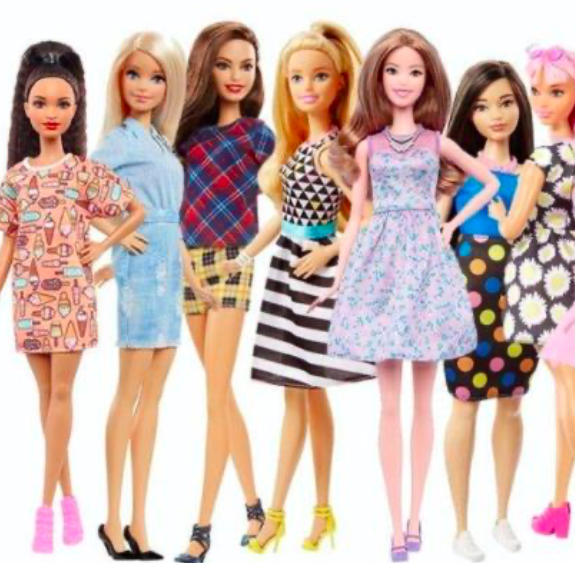
芭比都有美得發亮的金色頭髮,
眼睛在長長睫毛的襯托下,
像珍珠一樣閃閃發光。
她們小巧的嘴巴,
有櫻花粉的,也有蘋果紅的。
我玩到忘我,忘了時間。

等我離開小芬家回到路口,
遠遠就看見媽媽氣急敗壞的身影。
她快步朝我走來,
順手從路旁竹叢折下一截竹條。
「走去哪?」
「走到這下正知轉?!(客語)」
邊打邊罵,下手越來越重。

在鄰居注視下,
我被竹條一路抽回家。
我看著天空的那片雲,
不哭也不求饒,
只有眼眶,
已染上芭比嘴上的蘋果紅。
Each Barbie had dazzling blonde hair, their eyes shimmering like pearls beneath thick lashes. Their lips were cherry-pink or apple-red, with bright smiles. But what captivated me most were their clothes: a sky-blue satin gown, a daffodil-yellow tulle dress, a pink mini skirt, cute tops, denim jeans… plus crystal heels, sparkly earrings, fashion handbags. It was a world of magic.
In our village, no one owned such toys. They belonged to television commercials, never to girls like me.
Fen and I dressed them up for shopping, for balls, for daydreamed adventures. I lost myself in the moment — but deep down, I knew I couldn’t stay long. Still, I wanted to touch that satin dress one more time. As if I held it just a bit longer, I could remember it forever.
As I left Fen’s house and reached the corner of Pingde Road, I saw her — my mother — already waiting, storming toward me, a bamboo cane in hand.
“Where’d you go, huh? Where?! And now you remember to come home?” she shouted, hitting me as she yelled.
Under the gaze of neighbors, she whipped me all the way home. I kept my eyes on the cloud, not crying, not begging — only my eyes rimmed red, like Barbie’s cherry-pink lips.
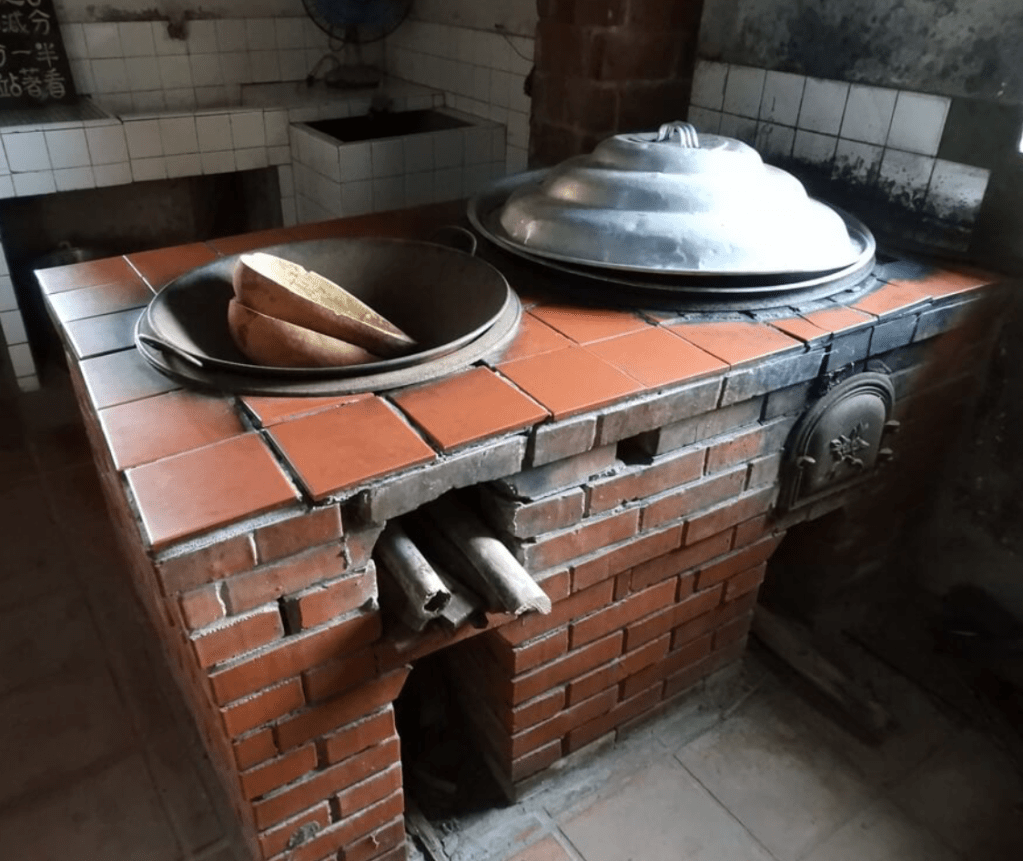
Back home, the kitchen was already heavy with the bitter, comforting scent of woodsmoke. I took a bucket to the hearth, where the fire hissed and spit as it consumed dry bamboo husks. The air smelled of burnt earth and the sweet, cloying aroma of rice water. As the steam rose from the stove, it carried the metallic tang of the old iron cauldron, a smell that felt as ancient and unyielding as the house itself.
I filled the heavy bucket with hot water, carried it, arms straining, burning steam rising against my face. I set it down in the bathroom, mixed it with some cold water, and sat on a low stool. My feet soaked inside the bucket, arms wrapped around my legs, chin resting on my knees. I stared blankly into the steam from the bucket. Warm mist touched my cheeks, and then — tears, falling straight into the bucket.
Were they meant for my welted and bruised legs?
A child’s tears are a plea for warmth. And when warmth doesn’t come, the tears stay hidden. Maybe it was the steam, gentle and kind, that drew mine out.
I dipped a towel into the warm water and draped it over my shoulders, hoping my body could feel even a sliver of that warmth

The price of indulgence was pain —
                                   I had tasted it.
Barbies were beautiful —
                          I had to part with them.
My fleeting childhood  so short —
              it already slipped into yesterday.

放縱自己的後果,
                             很痛,
                                 我嚐到了。
芭比娃娃,
             很美,
               我必須跟她們告別。
曇花一現的童年,
                         很短,
                           它將成為昨天。
The thought alone made tears well up again. I buried my face into my knees so the tears would not roll across my cheeks, but fall straight into the bucket instead, asking nothing, claiming nothing.
I dried the tears from my eyes, wiped the water from my body. Got dressed and left the bathroom. Back in the bedroom, I folded the pleated skirt that bore the stripes of the cane and took out the winter uniform pants at the bottom of the clothing box. For the next few weeks, the pants would veil the sorrow that marked my farewell to childhood.
Soul Whisper:
I was just an eight-year-old little girl who touched a piece of beauty and paid the price for it. My childhood didn’t vanish in a single blow. It splintered quietly, across one road, one bamboo cane, one forbidden dream.

Mother’s tenderness lived side by side with her rage. As a child, I never knew which version of her would be waiting for me at the door: a mother who saved coins to buy us noodles, or a mother who broke bamboo sticks against my legs.

But I knew she was never a monster. She believed every coin must be earned with sweat. She found ways to place her parents’ comfort above her own. She was a woman cornered by hunger, her love twisted by poverty into shapes that wounded even as they tried to protect.

She would beat us over a few coins. Because in her eyes, those coins were not just for rice — they were the only barrier between us and the street. They were the difference between having a roof or sleeping in the rain.

Patience, gentleness, and soft words — these are luxuries for the safe. Mother could not afford such things. She gave me what she had: rough and terrified grit of survival.

And so, her hands gave and her hands struck. But I never held resentment against her. Because we were just souls, bound together in the same darkness. She didn’t teach us how to live but she fought to keep us alive. And that was everything.

She was hunger’s daughter, and I was hers.
Chapter 6 The Taste of Rewards
I slowly opened my eyes.
The first thing I noticed was the cold dampness spreading across my legs.
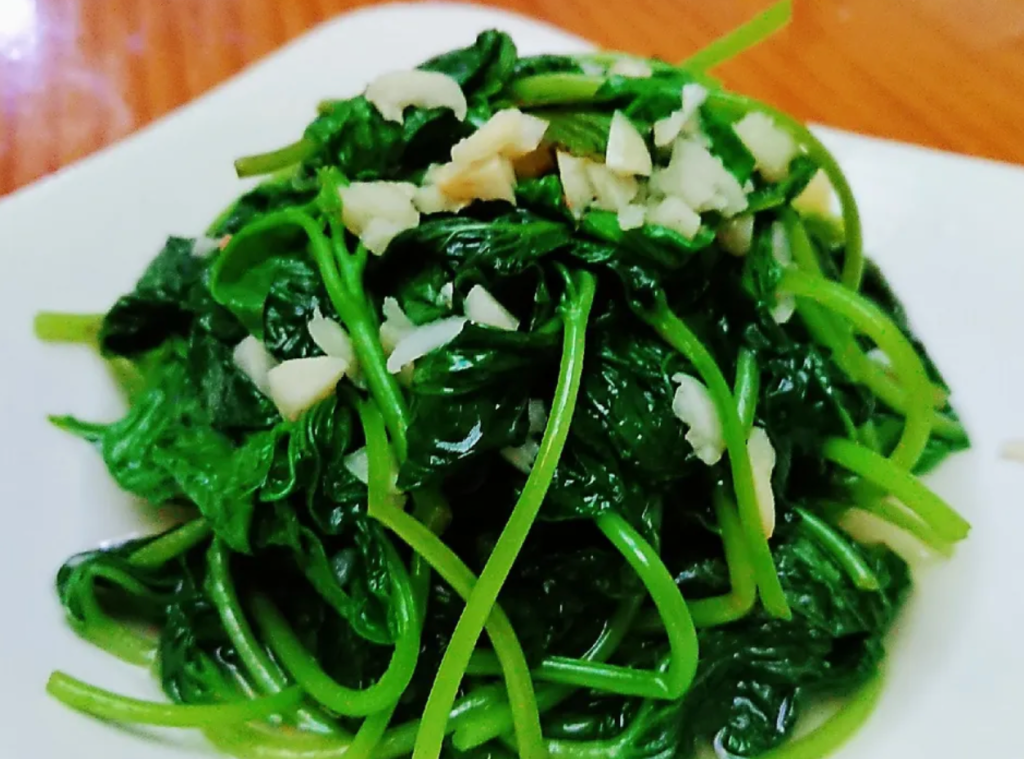
Gravel dug into my back. Weeds brushed against my arms. A bucket lay on its side a couple of feet away, water still trickling out. I was lying in a shallow puddle in the vegetable garden, soaked through. A dull throb pulsed from the left side of my head.
Instinctively, I reached up and felt a swollen bump — tender, round, and angry.
I braced my palms against the wet ground and pushed myself upright. The world tilted. My head spun. My limbs felt hollow, like someone had scooped the strength out of me and left nothing behind. My stomach growled, loud and sharp, pressing my spine forward until my ribs nearly kissed it.
That’s when it hit me: I had passed out from hunger.
I had no idea how long I’d been lying there. Time felt loose, disjointed. What hour was it? I couldn’t tell. All I knew was that if I didn’t eat something — anything — I’d collapse again.
I lifted my head and scanned the garden.
A patch of yam leaves caught my eye — tender, bright, vividly green, almost glowing in the sun.
I pushed myself to my feet, but as soon as I took a single step, everything darkened. The world spun violently around me. I froze. Held still. Waited for the dizziness to pass.
Only when the spinning eased did I start moving again — one slow, shaky step at a time — toward that patch of green. When I finally reached it, I knelt down and began picking with both hands, gathering as much as I could hold.
This vegetable garden was part of my mother’s garment factory. It used to be nothing more than a patch of wild, weedy land behind the cafeteria — overgrown, forgotten. But my mother had asked the factory owner for permission to use it.
Then we cleared the brush, turned the soil, and divided it into tidy rows. We planted vegetables of all kinds — bitter melon, cabbages, eggplants, and yam leaves. The vegetables fed our family, and whatever was left, we sold to people working in the factory.
Every afternoon at four, I came out with a bucket and did my part: watering the rows, pulling weeds, checking for worms and snails.
地上的碎石、雜草,
還有一個翻倒的水桶映入眼前。
我整個人躺在一灘水坑裡。
左側腦袋傳來一陣悶痛,
我下意識伸手摸了摸頭,
指尖碰到一個腫起來的大包。

我撐著地,
艱難地坐起來。
頭昏得厲害,
四肢像被抽空了一樣沒力氣,
不確定究竟發生了什麼事。
The garden sat just outside the factory kitchen. The cooking auntie had already gone home for the day, and the place was completely still — empty counters, silent stovetops, the last light slanting through the windows.
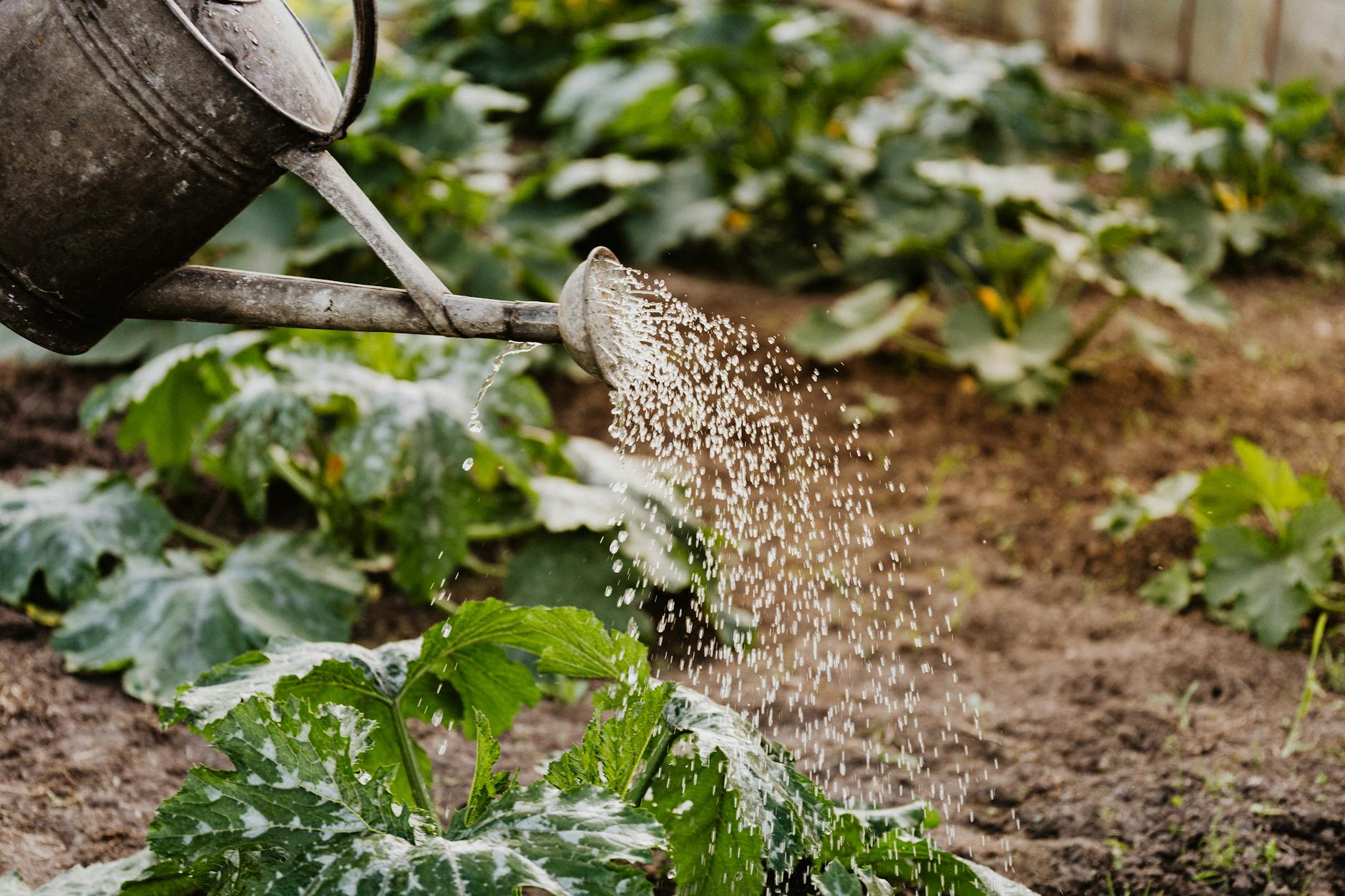
I walked in, clutching the bundle of yam leaves. Rinsed them under cold water. Chopped them into rough pieces. Smashed two cloves of garlic with the side of a knife.
Oil in the wok. Flame on high. The sizzle of garlic hit the air — and instantly, the whole kitchen was filled with that sharp, savory scent. Two minutes. A quick stir-fry.
The leaves wilted, turned glossy, and released their earthy sweetness. Done.
In less than five minutes, the whole plate was gone — devoured, vanished into my empty belly.
Delicious. Unbelievably good.
Fainting like that wasn’t new to me. I’d gotten used to it. Most days, I lived off rice mixed with vegetable broth — watery meals with just enough flavor to feel like food. There was never enough protein, rarely any meat.
Dizziness. Fatigue. Black spots dancing in my vision. That was normal.
That was my normal.
That week, the factory was rushing a big order, so Mother demanded I stay home to sew judo kimonos. But final exams were coming, and I had to show up at school for those.
I got up early, cramming facts into my brain at double speed, flipping pages in every spare moment between tests. I skipped lunch just to keep studying — no time, no energy to waste on food.
By the time the afternoon came and I stepped into the garden, my body was wound so tight it felt like a clock spring stretched to breaking.
Then — snap.
The tension gave out.
I collapsed.
But strangely enough, it was that moment — collapsed on the ground, dizzy with hunger — that led me to discover the best afternoon snack of my life: garlic stir-fried yam leaves.
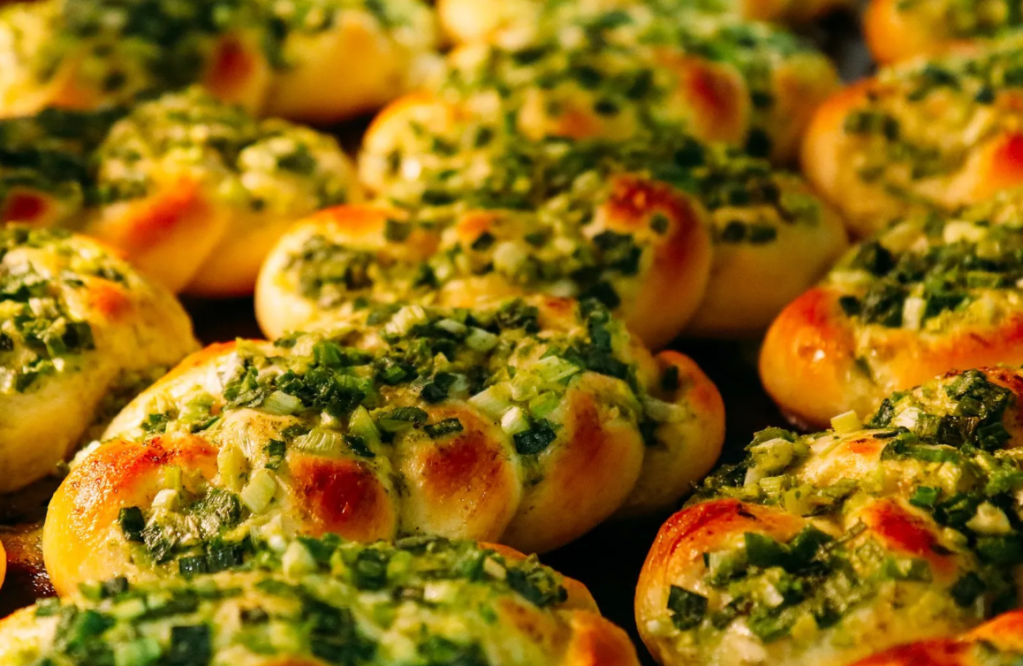
Before that day, there was only one snack that held a special place in my heart: scallion bread.
Every afternoon at precisely 3:30, a “mobile bakery” minivan would roll into our village and park by the roadside. The moment the door swung open, the smell of freshly baked bread spilled out into the air — warm and irresistible. The shelves inside were packed with every kind of bread you could imagine, each one looking too good to be real.
But for Brother and me, they were just scenery. Something to look at, not to touch. Because we didn’t have any money.
About six months earlier, Brother had taught me a trick — a way to “get money,” as he called it.
We each had our own piggy bank, his green and mine orange, both heavy with 5NTD coins. Those coins were our reward from Mother. For every day we reached the sewing quota, we’d earn one.
Mother made it clear: the money was to be saved.
That’s why she gave us piggy banks in the first place.
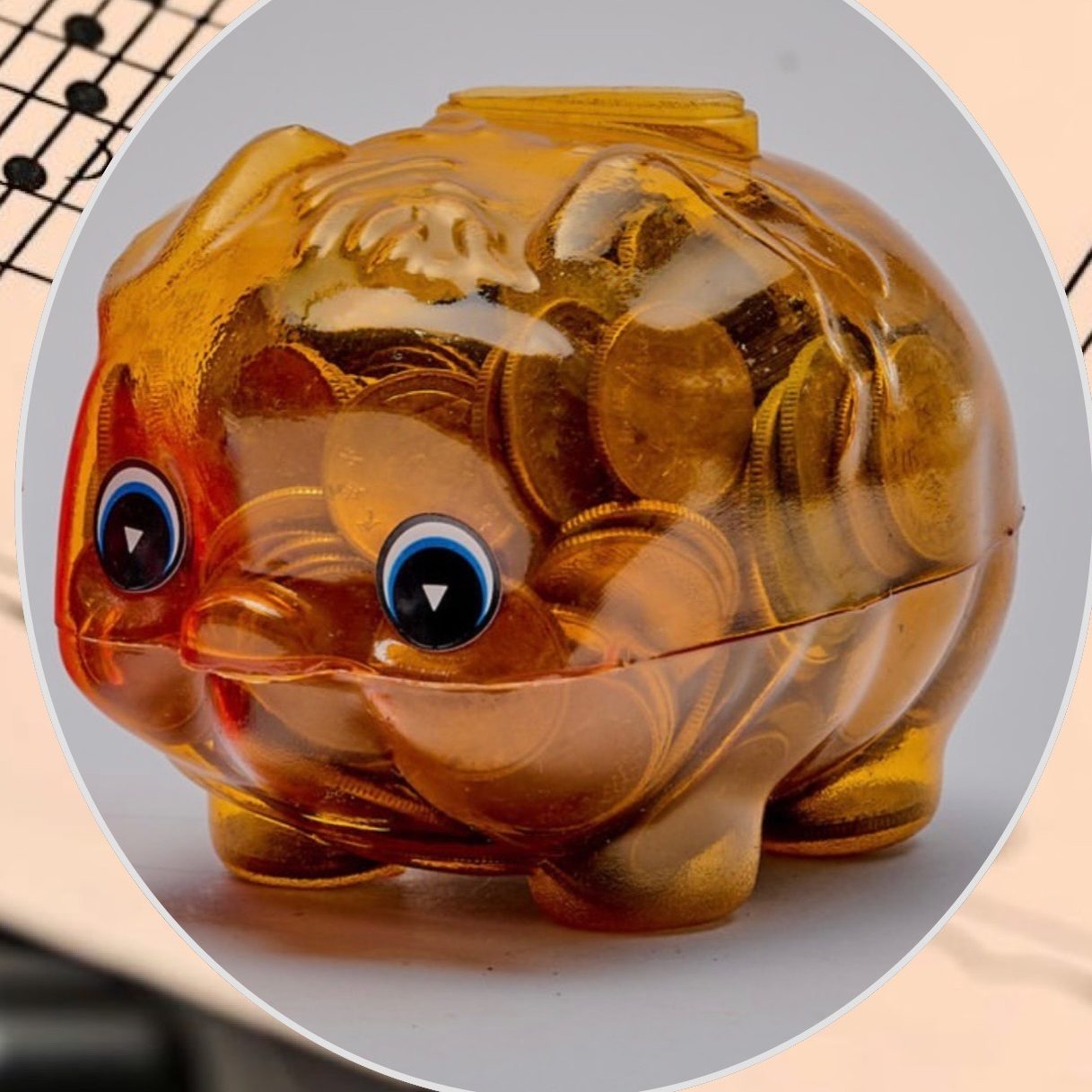
我們兄妹各有一隻小豬撲滿,
裡面塞滿了五元銅板。
那些銅板是媽媽給的獎勵 —
每天只要柔道衣做到規定數量,
就能拿到一枚。

哥哥用髮夾示範,
教我怎樣從撲滿的存錢孔把銅板挖出來。
學會之後,
每天下午,
我們都會去麵包車前報到,
挑一個麵包當點心。
Brother showed me how to get the coins — with a hairpin. He slipped it into the opening at the bottom of the piggy bank and fished the coins out, one by one. Once I learned the trick, it became routine.
Every afternoon, we’d show up at the bakery minivan and each pick out a piece of bread for our snack. There were plenty of other breads that looked just as tempting, but I always chose the scallion bread. It was the only indulgence I ever allowed myself to repeat.
But good things never lasted long. Sooner or later, our secret was discovered. Mother found out about the piggy banks.
That day, we were beaten badly — with a wire hanger.
The metal struck our legs, splitting skin on contact. The pain was immediate, sharp enough to make it impossible to stand.
“This money was meant to be saved — not STOLEN!”
“And you stole it just to buy snacks!!”
Mother’s voice was frantic with rage. The hanger rose and fell again and again.
Hearing our screams, Grandmother rushed out from her room into the living area. When she saw her grandson being beaten, she stepped in front of him without hesitation and shouted,
“If you’re going to hit him, you’ll have to beat me to death first!”
No matter how furious she was, Mother would not lay a hand on her own mother. When she could no longer strike my brother, she turned instead — and poured all the anger she had been holding back onto me.
With each rising welt across my skin, the scallion bread began to fade — little by little — from my world.
That was when I realized: the things adults said they were giving me had never really been mine. Those so-called “rewards” were just tools to keep me working harder — never gifts I was allowed to enjoy.
But garlic stir-fried yam leaves — they were different.
They didn’t cost money. They came from the garden I helped grow. I picked them with my own hands, cooked them by myself. I didn’t have to sneak around. I didn’t have to be afraid of punishment. I could eat as much as I wanted. As often as I wanted.
And even now — after all these years — garlic stir-fried yam leaves are still my favorite dish in the world.
At eight years old, I understood the taste of rewards. Not something sweet, not something meant to nourish, but something designed to train.
Just enough to keep you going. Wrapped in the language of kindness. Disguised as encouragement. They were a way to lead me elsewhere — toward more effort, more display, more usefulness.
And one day, even my dreams came dressed as rewards.
Soul Whisper:
They called it a reward — one coin for dozens of judo kimonos I sewed.
A piggy bank to teach me the virtue of saving.

I believed them.
I believed the coins were mine.
I believed by saving them, I was allowed to get something I wanted one day.

But when I finally spent what I had earned — they called it stealing.
When I reached for something small and warm — they reached for the hanger.

That was the day I learned what rewards really are.
Not gifts.
Not gratitude.
But tools.

Tools to keep the obedient in line.
To make people work harder, and believe they’re being loved for it.

So I stopped waiting for rewards offered by others.
And I chose something they couldn’t twist into a trap.
Something that didn’t come with a price.
A plate of garlic stir-fried yam leaves.

It is delicious not because it was free —
but because it came from me and it was honest.
Chapter 7 The Flight of a Dream

我的心,
當場飛出了縫紉機旁那扇不關的窗,
越過「棒球場」,
直奔東眼山,
迫不及待地想告訴陽光這個好消息。

接下來幾天,
我總算體會到什麼叫
笑得合不攏嘴。
From the second grade on, peace and quiet officially resigned from my life.
Every term-exam ended with my name at the top, which apparently meant my face had to show up at every possible contest — speech, calligraphy, recitation, dancing, Mother’s Day card design, you name it. Basically, I was the class’s all-purpose representative.
And over time, things began to change. My classmates started electing me to be the class leader. They asked me to help mediate, to assist with their lessons. Their eyes looked at me differently — as if, for the first time, they saw a person instead of a label.
When my third grade teacher, Miss Yu, signed me up for that so-called plein-air watercolor contest, I had no clue what “plein-air” meant. I didn’t even have a set of watercolor paints of my own, nor the brushes.
It wasn’t until I stood at the park where the contest took place, watching other kids set up their easels and unfold shiny watercolor sets, that I finally understood: we were supposed to paint the scenery in front of us.
In my hands were only a few old brushes borrowed from the school’s storage closet. The bristles splayed out like tiny brooms. The paint box was dry and cracked, the colors bleeding together like a spoiled stew. I spread a sheet of paper and copied what the others were doing — dipping in water, mixing colors — like a student sneaking glances at someone else’s test.
Somehow, against all odds, I walked away with second prize of the county-wide contest.
The teachers cheered as if they had raised a hidden genius. But me? I was just confused. My prize wasn’t cupcakes nor a brand new watercolor set. The school rewarded me… the walls.
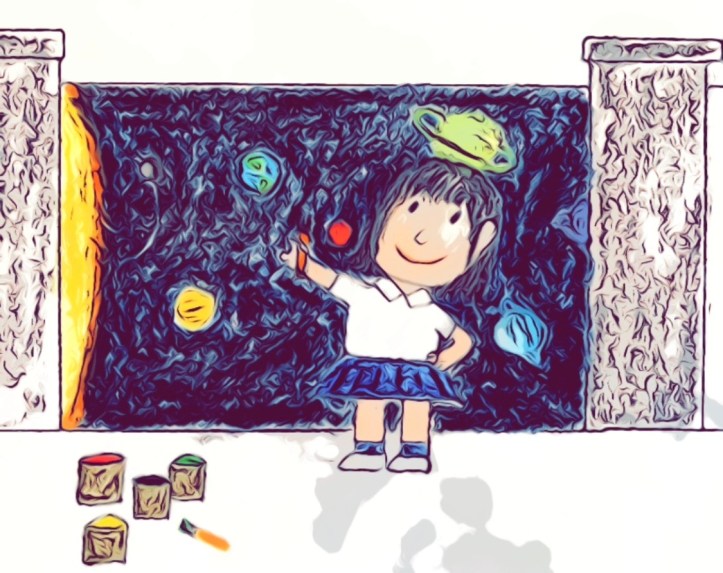
“Beautify the campus,” the principal announced proudly, “so visitors can see our glory.”
Just like that, I had the outer concrete walls of the entire school to showcase my artwork.
So there I was — sweating under the sun, painting the walls like a miniature construction worker. Glory had painted me right out of classroom, and onto a wall that was never going to do the homework or take an exam for me.
At school, I kept being pushed onto stages I didn’t even know the names of. To others, I looked like this wonder kid always soaring ahead. But to myself, I was just a little girl, running breathless, never truly knowing where all this flying was taking me.
The walls I painted were wide, but they never opened into a future I longed for. My dream came from somewhere else entirely…
I don’t remember when it started — only that whenever I caught sight of a piano, something in me sparkled like starlight. And whenever I heard its music, the whole world dissolved into a hush. Others spoke of heavenly sounds, but I didn’t need their definition. For me, the piano was like the night sky — its notes, constellations that lit the darkness.
There was this big mansion with beautiful flower garden in our village, and from its second floor windows often came the wonderful sound of piano. Each time I passed by, I’d stop and listen, utterly mesmerized, picturing myself playing it. But in a household weighed down by poverty and illness, the piano wasn’t just a luxury. It was another world entirely, a star on the sky I was never meant to reach.
Grandfather, nearly eighty, sat in a wheelchair and needed constant care. Mother, illiterate, worked long hours sewing judo and taekwondo kimonos in a garment factory. Her daily wage wasn’t even enough to pay for a single hour of piano lessons. And I — the worthless girl, the child no one believed in— to even imagine touching the keys of a piano was the kind of dream only a fool would dare. But a fool like me still daydreamed about it endlessly.
One day, as we worked side by side at our sewing machines, Mother muttered,
“I wish the Japanese folks would order more large-size kimonos,”
“The large one pays three dollars, and the small one a dollar fifty. But they take the same damn time to sew!”
“Mom," I said, after doing the math in my head.
“I work fifty, maybe sixty hours a week. If I take the pay of thirty hours, I could afford one piano lesson. You could have everything else. And I’ll sew really fast, making as much as I can…. I promise! You won’t even have to check how many I finish each day. Please let me learn piano….."
Maybe she saw how hard I always tried to be good. Maybe she felt sorry that she never offered me anything. Whatever it was, Mother nodded.
Her nod was hesitant, almost reluctant. But it was enough to set my heart soaring — right out the open window beside the sewing machine, flew over the rice meadows, over the baseball field, and straight to the mountaintops beyond. I couldn’t wait to share my wonderful news to the sun — my only friend for years, who came to me each morning, wrapping me in golden warmth, when no one else did.
For the next few days, I finally understood what it meant to smile so wide your cheeks hurt.
琴房裡放著一台鋼琴,
黑得發亮。
迎面襲來的冷氣,
酷似寒流,
凍得琴鍵冷冰冰的,
讓我手不停地顫抖。

在我按下琴鍵的那一瞬間,
我幾乎不敢相信,
我的手居然可以奏出這樣的聲音。
十指雖僵,
但我的心卻在悄悄解凍。
Then came the day of my first lesson.
I stepped into the classroom with my heart full of nerves and awe. My teacher, Miss Chen, was graceful and kind — like she had just walked straight out of a storybook.
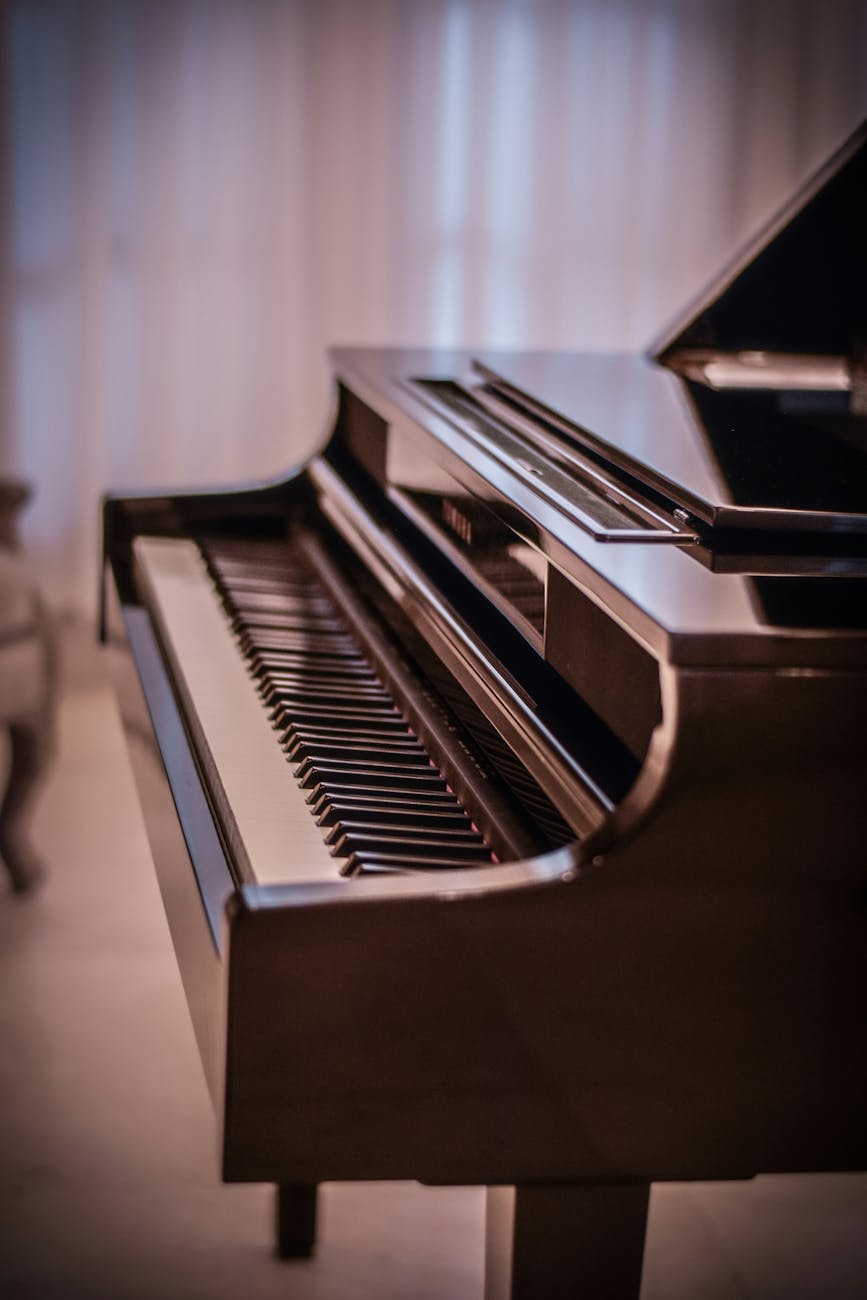
In the center of the room sat a glossy black piano, so polished it reflected the ceiling lights like still water. The air-conditioner hit me like a sudden cold front. The moment my fingers touched the piano, I almost pulled my hands back.
The keys were colder than I imagined — cold like marble, cold like the nights I spent alone. My hands trembled from more than just the chill. Miss Chen sensed it and gave me a warm smile, and slowly, I began to relax.
Something inside me — something long frozen — began to thaw. Every note I struck was clumsy, almost soundless, yet to me it was thunder. It was as if the piano was whispering: “you’ve found me at last!”
That hour passed in a flash. From then on, I’ve waited each week’s lesson with quiet and burning anticipation. Even the long hours of sewing felt lighter, maybe because my heart was finally smiling.
That impossible dream — that foolish wish — had come true. Not because I believed in miracles but because I refused to accept what others called “impossible”.
I didn’t want to be a “useless mutt” they said I was. So I did everything I could to be useful. When you are useful, you have leverage. Small bits of leverage, added up over time, became bigger bargain power. With years of sewing, I finally earned something I thought I could never have — piano lessons.
However, piano is not a skill one could master overnight. It takes a tremendous amount of time, money, and patience. My dream had taken flight, but how high or how far could it actually soar?
Soul Whisper:
There was a time I thought the piano belonged to another world. In my world, hands were for sewing, not sonatas. But somewhere between the hum of the sewing machine and the rustle of rice fields outside, a question bloomed quietly in me: what if I asked?

When I finally did, it wasn’t with loud hope, but with careful calculation. Mine dream was not free, it came with a price tag. It cost thirty hours of sewing a week. Every stitch on a kimono was a down payment on a sonatina.

The piano lesson didn’t erase the hardship. I still sewed, still worried about money, still carried the label of “worthless girl.” But each week, for one hour, I crossed into a different world — the one I used to only hear from afar. A world where my hands made music. A world where something in me softened and dared to believe.

The truth is, I didn’t know how far that dream would take me. But I know what it gave me: proof that even in a life stitched with silence and survival, a dream — just one — can lift the soul high enough to keep going.

My hands, once chained to thread and cloth, had touched keys that unlocked another world.
Chapter 8 The Tortoise and the Hare
寓言是天真的,
現實卻是殘酷的。

昨天的兔子因為睡了午覺輸了一程,
但今天的兔子可能裝上了勁量電池,
明天還會有更快的兔子出現。

就算贏了今天,
贏得了明天嗎?
During our story class, Miss Yu told us the story of “The Tortoise and the Hare.”
As soon as she finished, I shook my head in disbelief and said “Impossible!!”
Miss Yu looked at me, puzzled. She didn’t understand why I was so against it.
“I just don’t get it! Why would anyone force a tortoise to race in the first place?”
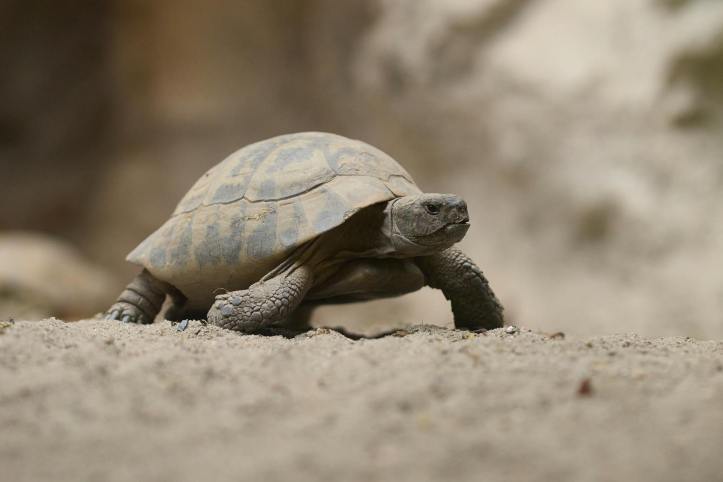
It wasn’t that I didn’t want to believe the tortoise could win. It was just … I was the tortoise. And winning was never something written into the script of my life.
“But the tortoise did win!” my teacher and classmates all chimed in.
Fables are innocent. Reality isn’t.
Yesterday’s hare lost because it napped. But today’s runs on Energizer batteries, and tomorrow’s will be faster still. Even if I won today, could I win tomorrow?
I looked around in the classroom, all of them hares unable to understand the shadow that lives in a tortoise’s mind. A hare can run if it wants to. Jump, leap, sprint. But a tortoise? It carries a heavy shell and walks on short legs — what speed could it possibly have? A tortoise racing a hare is like asking a crocodile to climb trees against a monkey. Life is a marathon that lasts decades — how could the tortoise ever win?
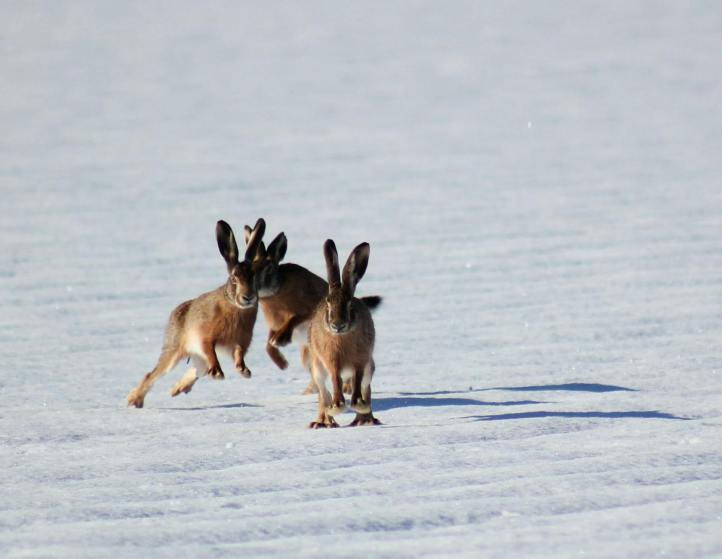
兔子無法理解身為烏龜的心理陰影。
兔子想跑就跑,
想跳就跳,
而烏龜呢?
背著重殼、
踩著短腿,
哪來的速度?
叫龜和兔賽跑,
就好像叫鱷魚和猴子比爬樹!
人生是一場數十年的馬拉松,
烏龜要怎麼贏?
I was the tortoise on life’s track. If I wanted a chicken leg, I had to beg leftovers every day. If I wanted a piano lesson, I had to trade 30 hours of labor just for one hour of music. So how, exactly, was I supposed to run this race?
That question rooted itself inside me. It knotted up my soul. I kept asking: How does the tortoise win?
When I finally began piano lessons, we didn’t have a piano at home. My classmate Ling, the daughter of a grocery store owner, had been playing since she was three. She’d been running this race for seven years already. And me, this little tortoise, hadn’t even found the starting line. That gap made my heart sink.
Tortoises have no special talent. If they want to race, they can only walk — one slow step at a time. So I told myself: I can’t afford to let discouragement weigh me down. I had to focus on the finish line.
I took calendar papers and drew black-and-white keyboard to create a paper piano. Every free moment, though not much, I pulled it out and practiced — training my fingers to remember the position of each key. The keyboard couldn’t sing, so I imagined the sounds in my head.
Every time my fingers moved, I told myself: I can have a voice too. I memorized the teacher’s techniques and practiced them on my thighs while walking or riding the bus — pressing, flexing, strengthening my fingers through thin air.
Eventually, I came to a new understanding of that fable. The tortoise’s opponent was never the hare. The real opponent was its own body — its heavy shell, its short legs. To win the race, the tortoise had to defeat the limits it was born with.
At the age of eleven, I made a vow to myself. I would race against the person I was yesterday. I didn’t need to care how fast the hares were or how many advantages they had. I would focus on my own rhythm. As long as each step I took was steadier than the last, longer than the one before, I was winning.
Two years later, Ling and I sat for the same level of piano certification. Mother and I had finally saved up enough to buy a cheap off-brand piano. But to me, it was my very own Steinway.

烏龜的競爭對手,從來就不是兔子。
牠真正的對手,是與生俱來的限制:
厚重的龜殼與短小的四肢。
烏龜要贏得比賽,
要戰勝的,是自己先天的劣勢!

十一歲時的我明白了烏龜要怎麼贏:
贏過昨天的自己。

不去在意兔子擁有的能力和資源,
只專注在自己的跑道,
讓自己的每一步都比前一步,
更踏實,更長遠。
Soul Whisper:
The world told me a race was about speed. But I was never asked if I wanted to race. I was simply placed at the starting line, with a shell on my back and no map in hand.

The world clapped for the hares, sleek and shining with head starts and confidence, while I — the slow one — was expected to keep up or be forgotten.

So… I kept walking.

When others had keys, I drew my own. When others had melodies, I imagined mine. While the world sprinted, I studied the ground beneath my feet — measured each crack, each stumble, each breath. I turned my body into an instrument. My fingers became memory. My back carried both hunger and music.

No one saw the race I was in —
not against the hares, but against despair.

Not for applause, but for becoming.

Every step I took was a vow:
I will not be fast, but I will be true.
I will not arrive early, but I will arrive whole.
My voice may be quiet, but it will echo with soul.

And in this long race called life, the tortoise is not slow —
She is steady.
She is sovereign.
She is the composer of her own destiny,
playing on keys she drew herself.
Chapter 9 When Darkness Arrived
八月我們正式成了鈴木機車廠的清潔工,
而我,也走入了人生的黑暗期。
因為我的童工生涯又多了一份全職工作,
柔道衣縫紉工退居成兼職,
而我的學生身份幾乎名存實亡。

這段人生黑暗期最折磨我的,
是每天清晨四點的起床時刻。
在小學這個貪睡的年紀,
大腦總是賴床不起,
身體像是無主魁儡般移動著,
還努力試著喚醒身上的覺知。
而這些沈睡的感官,
通常在走過陰森的墓地時就會全身開啟。
“Please, miss… your factory is so big, there must be something I can do — anything. Just give me a chance,” my mother said, her voice low and rough.
“I’ll work hard, I swear. You don’t even have to pay much.”
She wasn’t used to beg. But that day, she was ready to crawl if that’s what it took to feed us.
It was 1990. Suzuki Motor had partnered with Taiwan’s Tailing Industrial Company to begin exclusive production. The new factory was built right behind our house, a monumental event in our little village — hundreds of workers needed, enough jobs to support several surrounding communities. My mother wanted to apply. But without any education, she was turned away at the gate.
“If you don’t have any degree, the only position available is as a janitor. Do you want it?” the HR woman said.
“Please, let me come in before 8 and after 5. I already got a job at the garment factory. I need both to get by!” my mother asked cautiously.
“That works perfectly. You won’t interfere with the workers. Come try it for a month. Let’s see if it’s a fit.”
And so, my mother was given a trial as a janitor. By August, we officially became Suzuki’s janitorial staff. And I — 11 years old — entered the darkest days of my life.
I call it my season of darkness because it marked the beginning of my second full-time job as a child labourer. My sewing job — stitching judo kimonos — became part-time. My identity as a student was hanging by a thread.
What haunted me most were the 4AM wake-ups. At an age when children cling to their sleep like bears, my body had already become a puppet — stumbling through the cold, barely attached to consciousness. My senses didn’t fully return to me until we passed the graveyard.
When Suzuki built its factory, it bought up most of the land — except for a small plot owned by the Sung family on the east side. That plot had several graves, which remained untouched.
Every morning, my mother and I had to bike through a densely wooded narrow path skirting the factory wall, through tall silver-grass and eerie fog, into the chill of the predawn. The fog made no distinction between the living and the dead. Everything felt alive and haunted at once. My skin bristled. My sleepy mind would immediately begin chanting: “Merciful God, protect me.”
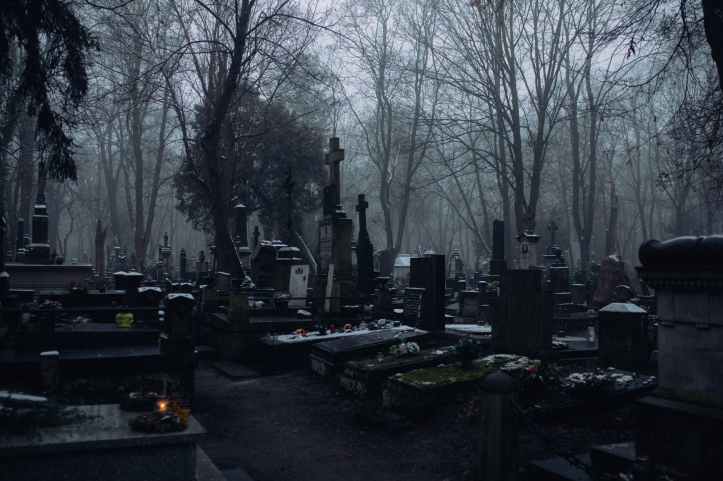
每早四點我們沿著工廠圍牆邊的林間小徑,
穿越芒草叢生、陰氣森森的荒地去上工。
清晨時刻往往霧氣深重,
夜霧把死的活的都層層包圍,
更是顯得草木皆兵,
好似隨時會有鬼怪冒頭而出。

每早的黑暗時光經過這裡,
我都寒毛直豎,全身發顫,
原本神智不清無法言語的腦子,
馬上就能念出「大慈大悲觀世音」。
Every morning, I would clock out at 7AM from the morning shift, rush home for a quick breakfast, then I’d run to school.
That semester, our homeroom teacher, Mr. Yeh, was a man with no passion for teaching. He discovered a genius way to lighten his workload: outsourcing his job to an eleven-year-old. He often skipped class entirely, leaving me — the class leader — to keep the zoo in order and explain the homework. Eventually, classmates started begging me to teach them. So my “teaching career” began with Chinese literature and math.
Standing in front of blackboard didn’t scare me. I could read the textbook once, and the idea stuck well enough to repeat it out loud. The problem was, Mr. Yeh decided to make it a permanent arrangement. He kept handing me his chalk, his red pen, then even the grading sheets. By the end of the term, I was essentially an eleven-year-old civil servant — but without salary, benefits, or a union.
Yet miracles didn’t happen. Despite my unpaid labor, our class’s midterm and final scores were always the lowest in the grade. How could they not be? I was just a kid myself and a poor one — I had no other resources except the textbooks.
In Taiwan, families with money sent their kids to cram schools, stacked their desks with practice booklets, and timed them with mock exams. I had none of that. If life had been fair, I would have had a math tutor. Instead, I was the math tutor for all my classmates.
Even if I had been handed extra reference books to help out with my study, I wouldn’t have had time to open them. My study time was the ten minutes of recess between classes, while other kids played dodgeball or jump-rope. I squeezed one minute into two, scribbling homework before the next bell rang.
After school, I sewed kimonos to pay for piano lessons, watered crops we hoped to sell, then reported to Suzuki factory for night shift until 10PM. Then at 4AM, it started all over again.
I was like a spinning top powered by other people’s negligence, whirling until I forgot what rest even meant. Exhaustion felt like a rocket propelling me straight to Mars.
And in the middle of all that darkness, piano became my lifeline. That one hour a week — my piano lesson — was the only thing keeping me from drowning. It was my piece of driftwood in a merciless ocean. I clung to it like it was all I had. Because… it was.
There was no light yet. No sign of dawn. And then — one race dragged me straight into the eighteenth circle of hell — just when I thought it couldn’t get any worse.
Soul Whisper :

Some children are born to chase butterflies. I was born to scrub factory floors before sunrise, to rise before the stars disappeared, to pedal through fog and ghosts and graveyards. My education began not with books, but with bleach, with hunger, with my mother’s sacrifices echoing in my body.

I was an eleven year-old child living three lives at once — a laborer at dawn, a teacher by day, and a janitor by night. I was a spinning top kept moving by the world’s neglect.

And yet — what saved me was not strength. It was music. Not the triumphant kind, but the trembling kind, the fragile notes that whispered, “You’re still alive.”

One hour a week at the piano was all I had. It reminded me that even in the graveyard of my childhood, there was still a pulse. And where there is breath, there is still a soul.  And where there is a soul, there is still a song.
Chapter 10 The Beginning of One Thousand Dark Nights
接下來的日子會更難過嗎?是我一千個暗夜的開端嗎?
我不敢去想。

我奮力刷著地板,縫著衣服,咬牙忍痛地工作。
我不敢喊痛,不能表現右手的軟弱,
害怕那會成為被迫放棄鋼琴的理由。

好不容易站上了跑道,能跟兔子一較長短,
我真的不想放棄,
即使已經是殘了一腳的烏龜,
我還是想要繼續這場賽跑。
為了鋼琴,為了自我,
我忍著。
Two months from graduation, elementary school was slipping away, but I had no idea the worst was just about to begin.
For our final P.E. evaluation, we had to run a timed 200-meter sprint. Mr. Yeh took us to the backfield track.
In the center of the backfield was a patch of grass, surrounded by eight laps of red clay. I never liked running there. I liked my shoes clean, and the red dust always stuck to the fabric like an insult — dirtying my shoes, staining my socks. But it was P.E. exam, like it or not, I had to run.
As I watched group after group take off, my heart began warming up in my chest. When it was our turn, I lined up in the middle lane — Zhen on my left, Ling on my right. We crouched together at the start line.
The whistle blew. Like stones flung from a slingshot, we launched forward. There’s no such thing as “let others go first” on a track — everyone was running for their lives.
“Only 50 meters left," I told myself. I pushed harder.
Suddenly, footsteps rushed up behind me. I felt a sharp hit on my back. My balance broke. My stride faltered. The red clay came up fast — too fast — then everything went black.
In the darkness, I felt myself being lifted. A searing heat spread from my elbow and knees. But the pain in my right shoulder was like a siren — it howled. I screamed. My mind came rushing back to the world.
I looked at my right shoulder — it was misshapen, bulging out at a strange, ugly angle. Waves of pain slammed through it, again and again. I didn’t want to cry, but the tears came on their own. Blood from my elbow and knees had already soaked into the clay, mixing into clumps of mud that stuck to my legs.
I couldn’t even feel the pain in my hands and knees anymore. My shoulder hurt so much, it drowned out everything else. But the stains — those stayed. Deep red marks on my shoes and socks, marks that wouldn’t wash out.
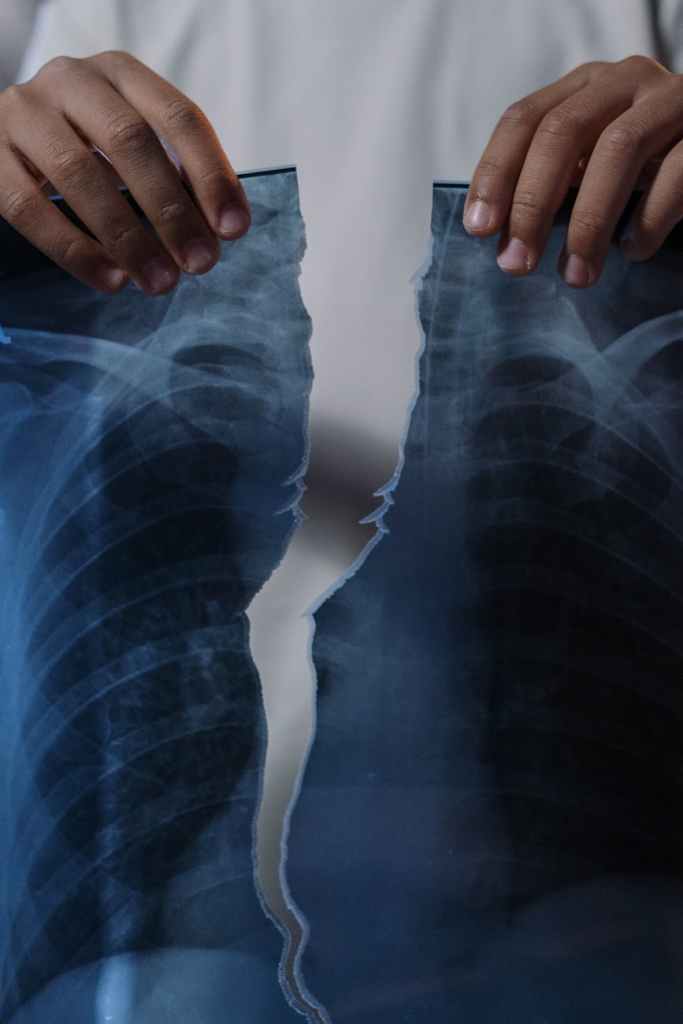
我看著右肩變形成一個怪異的角度,
並傳送著一波又一波的劇痛。
我不想哭,
但是眼淚已逕自奔流出來。

手肘和膝蓋流出的血,
已經和紅土混在一塊,
結成一團團栗色的髒泥,
黏在腿上。
手上和膝上的疼,
完全被肩上的痛給屏蔽,
我感覺不到,
但它們還是在我的鞋襪上,
留下洗不去的深紅印記。
My right collarbone had snapped, the bone overlapping itself. At the emergency room in Taoyuan Hospital, the doctors forcibly pulled it apart. I had no tears left. No voice to scream. I gritted my teeth, my brows clenched tight in pain. The fracture was so bad, they could only separate it slightly before strapping on a giant shoulder brace.
After the treatment, Mr. Yeh drove me home.
He was a tall, broad-shouldered man, his presence filling the small hospital hallway. In class, he had always towered above us, a little intimidating, his voice more bark than warmth. But that afternoon, I sat in the passenger seat of his sedan, shoulder strapped, body aching, staring out at the blurred lights of Taoyuan city. Silence stretched between us, only broken by the hum of the engine.
When we finally pulled into my village and stopped in front of our house, I caught the flicker in his eyes. He probably had never expected to see poverty like this.
Our roof sagged, patched with corrugated tiles that let in as much rain as they kept out. Whenever a storm came, water dripped everywhere. So Mother had tacked giant plastic bags to the ceiling, fastening their mouths to the walls so that rainwater could slide down like makeshift gutters. It was our poor man’s plumbing system.
When Mr. Yeh stepped inside, his tall frame had to bend low, or else the dangling plastic bags would brush his head. His eyes darted from bag to bag, following the path of rain stains on the walls, to the cracked cement floor where water stains still lingered. His face froze into a look I had never seen before — disbelief mixed with something heavier.
For the first time, perhaps, he saw me not as his “responsible class leader,” not the girl he left in charge when he didn’t feel like teaching, but as a child who lived in a house that barely kept the rain out.
I wondered if guilt crossed his mind — that he had piled so many duties onto the smallest shoulders in his classroom.
He didn’t say anything. But the silence between us felt louder than any lecture. And for the next few months, I went nowhere without that brace.
After only a few days of rest, I returned to my janitorial job. If I didn’t, we might lose the income. My sewing work over summer break suffered — the right arm couldn’t function, and I was slow. Junior high was about to begin. Heavier study. Longer hours. Would life get harder? Was this the beginning of my one thousand dark nights? I didn’t dare imagine.
I kept scrubbing floors with one arm. Kept sewing. I clenched my jaw and worked through the pain. I didn’t dare cry out, didn’t dare show how weak my right arm had become. I was terrified it would be used as a reason to take away the one thing that mattered most to me — piano.
I had fought hard to get on the track, to run alongside the hares. I didn’t want to stop now. Even if I was now a limping tortoise, I still wanted to stay in the race. For piano. For the self I longed to become. I held on. I didn’t let go. Not even when the storm rose.

The sea was roaring, fierce and wide,
My left hand — all I had — held tight.
Still fighting through that endless night,
Clinging to my driftwood with all my might.

I didn’t know how long I’d last,
But still held hope I wouldn’t be cast —

That storms turn to morning dew
Beneath a sky of blue.
May I feel the warmth of sunlight
Through the ache of every trial,
May I rise, and grow with every mile.

這片汪洋已經刮起了風浪,
僅剩的左手,還抓著浮木不放。
我不知道還有多少意志,仍留在我心上。

我祈求,
風浪,化為青空的晨露,
穿出黑暗後,我可以感受陽光的溫度;
走過痛苦後,我能夠看到成長的高度。
Soul Whisper :
Some pain is sharp, like bone breaking against clay. But some pain is quiet — long, flat, and wide like an ocean. That summer, I tasted both.

When the whistle blew, I wasn’t chasing victory. I was chasing dignity. I was chasing the part of me that still believed I could run with the hares. But the ground met me faster than hope, and from that moment on, I learned what it meant to fall and still keep moving.

My collarbone split, and with it, the illusion that effort could ever protect me. But I still showed up. I still worked. I scrubbed factory floors with a strapped shoulder and silent tears. I feared more than the pain — I feared losing piano, the only place I felt alive.

So I trained my left hand to hold the world. I clenched my teeth and told no one how much it hurt. Not because I was brave, but because I was afraid the world would forget me if I stopped.

I held on to rhythm like a drowning child holds driftwood. That music wasn’t just sound — it was survival.

In the dark, I told myself: If this is what it means to live, then let me live with all I have left.

Let me rise, even if bent.
Let me grow, even if slow.
Let me keep playing, even if with one hand.
Because even the smallest melody,
when played with hope, can call the dawn.

The clay that bloodied my knees became the ground I rose from. Even in one thousand dark nights, I would not stop moving.
Chapter 11 The Courage to Laugh Through Life
We didn’t have many house rules growing up — just two.
One: Save every penny.
Two: Use every minute to earn every penny.
That was it. Short, sweet, and strict. If we weren’t at school, Mom made sure every spare moment was scheduled with military precision. And the mission was always the same: making money.
Our daily assignments included sewing judo kimonos and scrubbing toilets at Suzuki factory. As long as our hands could move and our legs could stand, we were on the clock. Five-minute of idleness was five-minute of lost profit, which felt like a crime against productivity. Mom would swiftly plug the gap with a bag of Christmas lights and say, “Here, string these.”
For her, time was cash, and our childhood was a resource — meant to be used, not wasted. She was an unstoppable field commander — weather, fatigue, sickness, or common sense never got in her way. She ran our household like a boot camp — no downtime, no excuses, just alternate assignments.
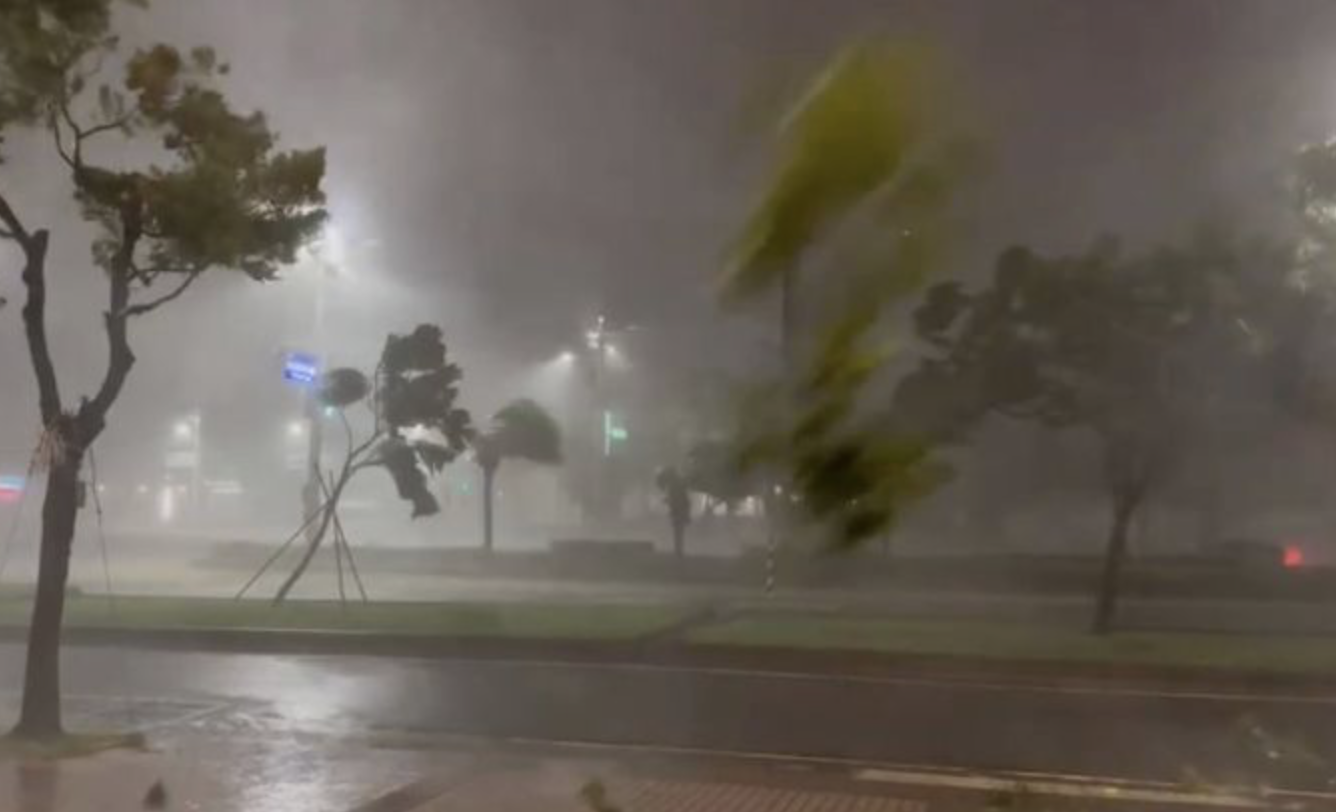
If a typhoon knocked out the power and the sewing machines went silent, Mom would instantly switch to Plan B: bamboo shoot duty. A storm might scare the neighbors, but not Mom.
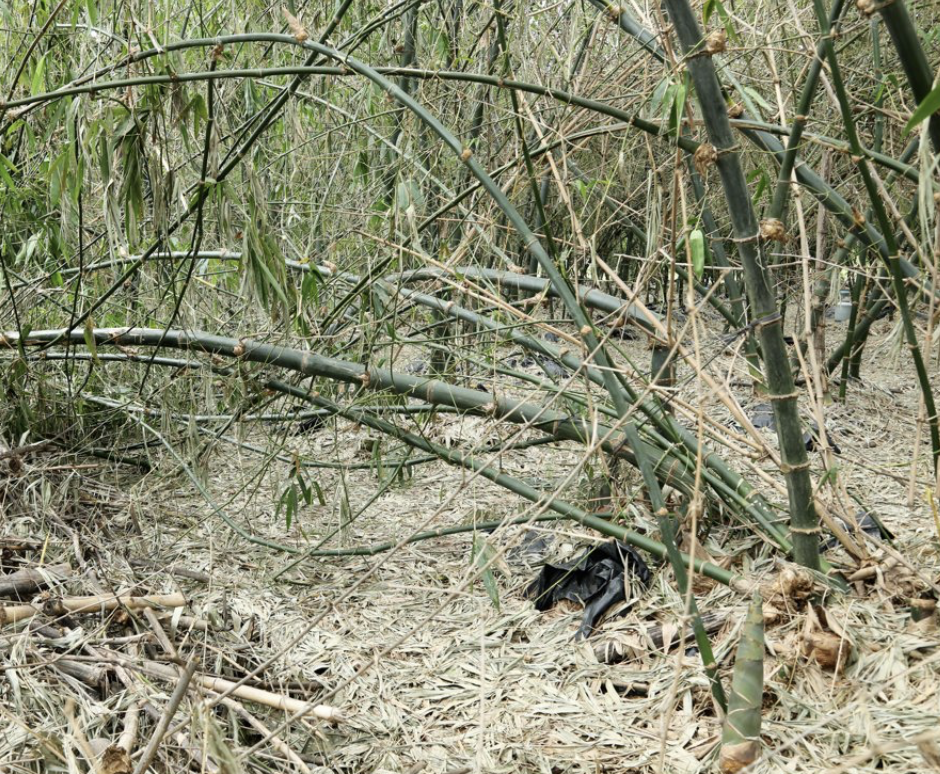
The bamboo grove was a muddy obstacle course, soaked and slippery, with fallen branches and leaves everywhere. Our rain boots got sucked into the muck so often it felt like the earth was trying to eat us alive. But messy as it was, this was prime time for getting bamboo shoots.
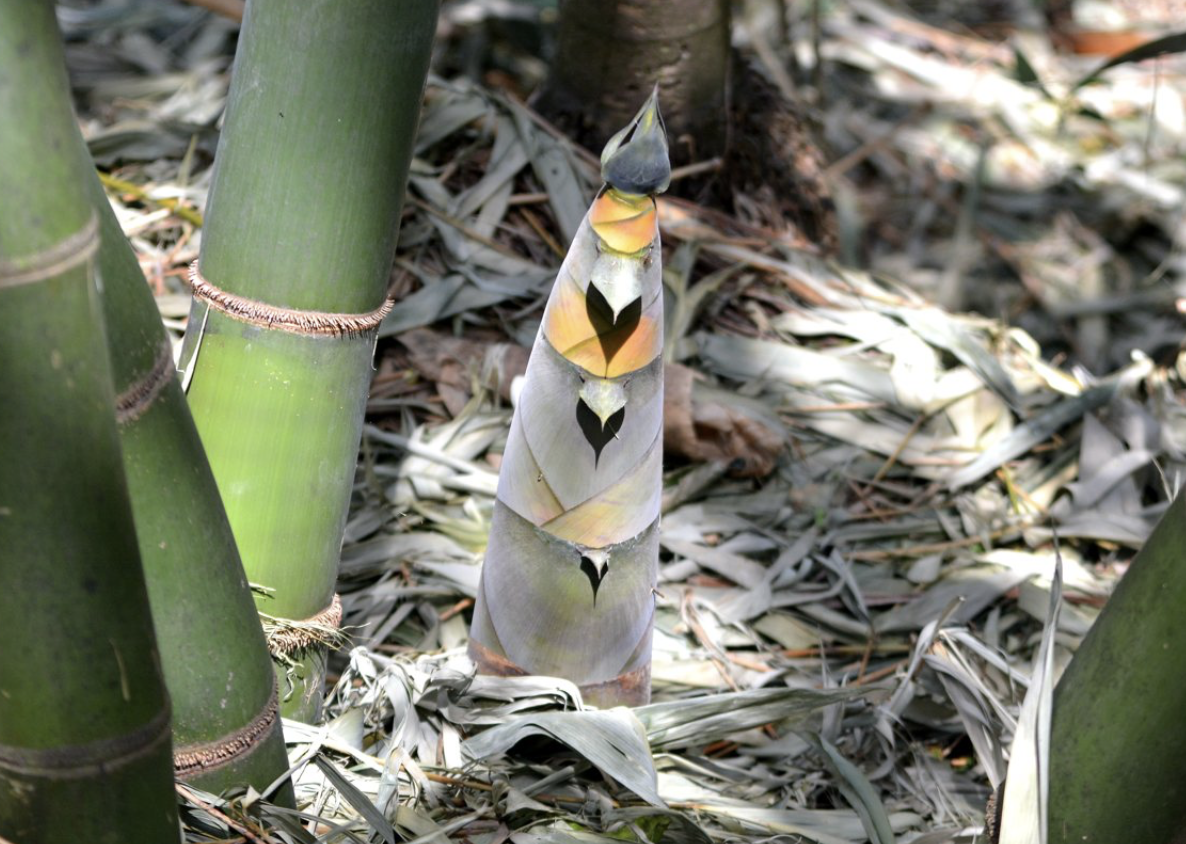
Typhoon winds and rain were brutal but also surprisingly generous. They’d rip young bamboo straight from the ground and toss the shoots across the forest floor like divine giveaways. No chopping, no digging required. Just stoop and scoop.
The rain washed away the topsoil, revealing clusters of tender green bamboo shoots poking out like little secrets from the earth.
Mom would always say, ”These are heaven’s gifts. Grab them fresh, before the sun spoils them.”
Once the sun hit, the shoots would turn tough and bitter, losing their crunch — and their market value.
So there we were, every time the wind howled and rain poured, pulling on our rain boots, slinging bamboo baskets over our backs, and following Mom into the grove like a little army of harvesters. Step by muddy step, we picked up those tiny green hopes dropped from the sky.
The storm always left us soaked and scruffy, but I still remember that treasure-hunt thrill and the taste of bamboo shoot soup.
After the treasure-hunt, Mom would turn our muddy harvest into a steaming pot of soup. Sometime with mushroom, sometime with gingers. The fresh bamboo shoots were always sweet, earthy and perfectly crisp. After a day of chasing typhoon blessings, it tasted like heaven in a bowl.
When we weren’t bamboo-diving, we foraged for wild greens or scooped clams from the creeks. Mom had a saying for every situation, and this was one of her favorites: “If we can’t make money today, we don’t spend it either. If you live near the mountain, eat the mountain. If you live near the water, eat the water. Go find what heaven’s left lying around.”
But foraging for bamboo shoots or wild greens was never a sure thing. What we brought home each time depended entirely on luck. Mom preferred work with guaranteed results. So for us kids, still too young for “real jobs,” she secured every dirty gig the village had to offer.
We were the unofficial janitors for every bathroom at the garment factory and Suzuki motorcycle plant. Hauling bricks at construction sites? Ours. Bagging chicken manure and cow dung? Also ours. As if the entire village had signed a secret treaty: All gross labor shall belong to this household.
For 360 days a year, our lives were steeped in stench. If there was Smell Survival Olympics, we would’ve won the gold medal — hands down.
My daily life was long, smelly, and toy-free. No weekends, no summer breaks, no winter holidays. Just a clock that never stopped ticking and a mountain of chores that never seemed to shrink. Good thing I was born with a sense of humor — it didn’t fix anything, but it sure made things a little easier to bear.
I remember one time working at the cow ranch, where the ground was simply minefield of cow dung — some dry, some wet, some gooey, and some so fresh they were still steaming. Maybe it was from waking up too early. Maybe it was the anemia from years of undernourishment. Whatever it was, I suddenly felt dizzy and fainted. Face-down. Straight into the steaming “mountain” of cow dung.
In the darkness, it was the stench — sharp, hot, and unforgiving — that jolted me back to life.
I scrambled to my feet, face smeared with cow shit, and locked eyes with a milk cow who was calmly chewing her afternoon snack, looking entirely unbothered.
笑著活,
是即使在淒慘無比的情況下,
仍選擇處之泰然的生活哲學。

是鎖骨斷後,
仍慶幸自己還有十隻手指,
能繼續彈琴。

是一邊裝袋牛糞,
一邊想像自己就是一朵鮮花,
正在活出『鮮花插牛糞』的這句諺語。

它讓我在最難堪的處境裡,
依然找到一點詩意,
不讓痛苦就此定義我的生活。

一花一世界,
一葉一天堂,
帶著靈魂之眼看世界,
喜樂由此而生。

笑著活,比悲壯地死更需要勇氣,
願你我永遠都保有這份勇氣!
We stared at each other for a few seconds. In that surreal moment, a thought floated through my head: “Huh… this pile of dung is actually softer than my bed. And warmer, too.”
I burst out laughing. A small crowd of cows began to gather around me, clearly intrigued by this strange human who had just face-planted into their living room.
Then another thought hit me: “Thank God that cow dung stank bad enough to wake the dead. If I’d suffocated in there, made it to the afterlife, and had to tell the registrar how I died….’Well sir, I passed out and got smothered to death in a steaming pile of cow shit’ — now that’s a legacy.”
And that, I doubled over laughing, unable to stand straight.
More cows started to wander over — chewing, blinking, tilting their heads, trying to figure out what species of crazy I belonged to. So that day, covered head to toe in “bovine perfume”, I bagged cow manure till sunset.
From that day on, my skin grew thick — steel-plated, gossip-proof. People could call me anything, a beggar, a low-born mutt — and I wouldn’t flinch.
After face-down in cow dung, nothing stinks enough to scare me. A little verbal trash? That’s just air freshner.
I didn’t get to choose my childhood. No rest in my youth, no safety net growing up. Every part of my life kept telling me — loud and clear — the world was not going to be kind to me.
So I made a decision: I wasn’t going to make things harder for myself. I would live with laughter. I would find small joys and gift them to myself.
When I went digging for clams by the creek, I’d make tiny boats with bamboo leaves and let them drift downstream — like sending worries away, one leaf at a time. Passing through the garden, I’d gather the fallen petals — delicate dresses for fairies, sewn by nature’s own hand. Azaleas for the skirt, jasmine for the sleeves — a gown stitched together by nothing but imagination. These were little sparks I gathered in life.
And whenever my body ached — from bone fractures or from beatings I couldn’t escape — my humor was the only comfort I had.
I’d whisper to myself:
“Well… I didn’t die today, so the show goes on tomorrow.”
“This must be rock bottom… unless tomorrow shows up with a shovel!”
And that thought cracked me up. Not because it was a joke, but because laughing was cheaper than therapy and it didn’t require Mom’s permission.
Sometimes, a laugh was the only thing standing between me and total meltdown. I knew life wasn’t going to magically get better. But as long as I could still laugh, I had strength to take one more step.
Soul Whisper:
That day at the cattle ranch, the laughter wasn’t a performance.

It rose from somewhere deep inside me — from a quiet inner place where humor is not born to entertain, but to keep a soul from breaking apart. It was survival itself: a small, defiant flame flickering in the middle of absurdity.

Soulful humor is a way of staying alive. It is the insight that grows only after walking straight through pain.

I learned very early that life is a long, biased, and relentless teacher. It offers no hints, no shortcuts — only harder and harder questions. Through humiliation, heartbreak, and impossible choices, I learned how to remain standing, how to keep smiling, and how to answer life’s exams with humor.

It wasn’t that I never cried. I did. But crying didn’t change the pain. Laughing gave me a way to carry it.

Laughing through life is a philosophy. This kind of humor doesn’t erase suffering — it gives it form. It allows a trace of poetry to exist inside the unbearable, so pain doesn’t get the final word.

Laughing our way through life takes more courage than dying dramatically. May we always have the courage to keep laughing — and to keep living.
Chapter 12 Breaking Through the Siege
國小老師不要求也不處罰,
走的是道家的無為而治。
國中老師則是執行法家的嚴刑峻法,
徹底地要求學業表現。
作業缺交或考不及格,
全都以藤條伺候。
上學遲到還要半蹲一整節課,
上學壓力根本是等比增加!
When I entered the middle school, I could immediately feel a shift in the classroom atmosphere.
In elementary school, my class was more like a field of wild grass than a garden — no fences, no pruning, just left to grow whichever way we pleased. Our teachers often didn’t show up, and no one seemed to mind. Learning was optional. Structure was absent.
Somehow, amid the chaos, I became the unofficial teacher, explaining math problems, walking the classmates through Chinese literature or science lessons. I didn’t think of it as special — just what felt needed to be done: helping my classmates out.
Naturally, I was top of the class for every term exam. By the time we graduated, the County Mayor’s Award, given to the highest-achieving student, landed on my lap. Not because anyone planned it that way, but because no one else had been watching closely enough to stop it.
Middle school was an entirely different universe.
There were fourteen classes in my grade, and each class had more than fifty students. I’d been placed in Class 102 — a room packed with the County Mayor’s Award winners. But unlike my laid-back elementary school days, this new class buzzed with a kind of academic electricity I had never encountered.
Hands shot up before the teacher even finished a question. Students practically raced each other to the answer. Within weeks, all the star students had already been assigned as “subject leaders” — little lieutenants for each subject, commanding mini empires of knowledge. Compared to the sleepy field I came from, this was a battlefield.
The teachers, too, were a world apart. In elementary school, they followed more of a Taoist philosophy: hands-off, no demands, no punishments. We were left to grow wild, like plants in an open field. But in middle school, it was all Legalism — strict discipline, zero tolerance.
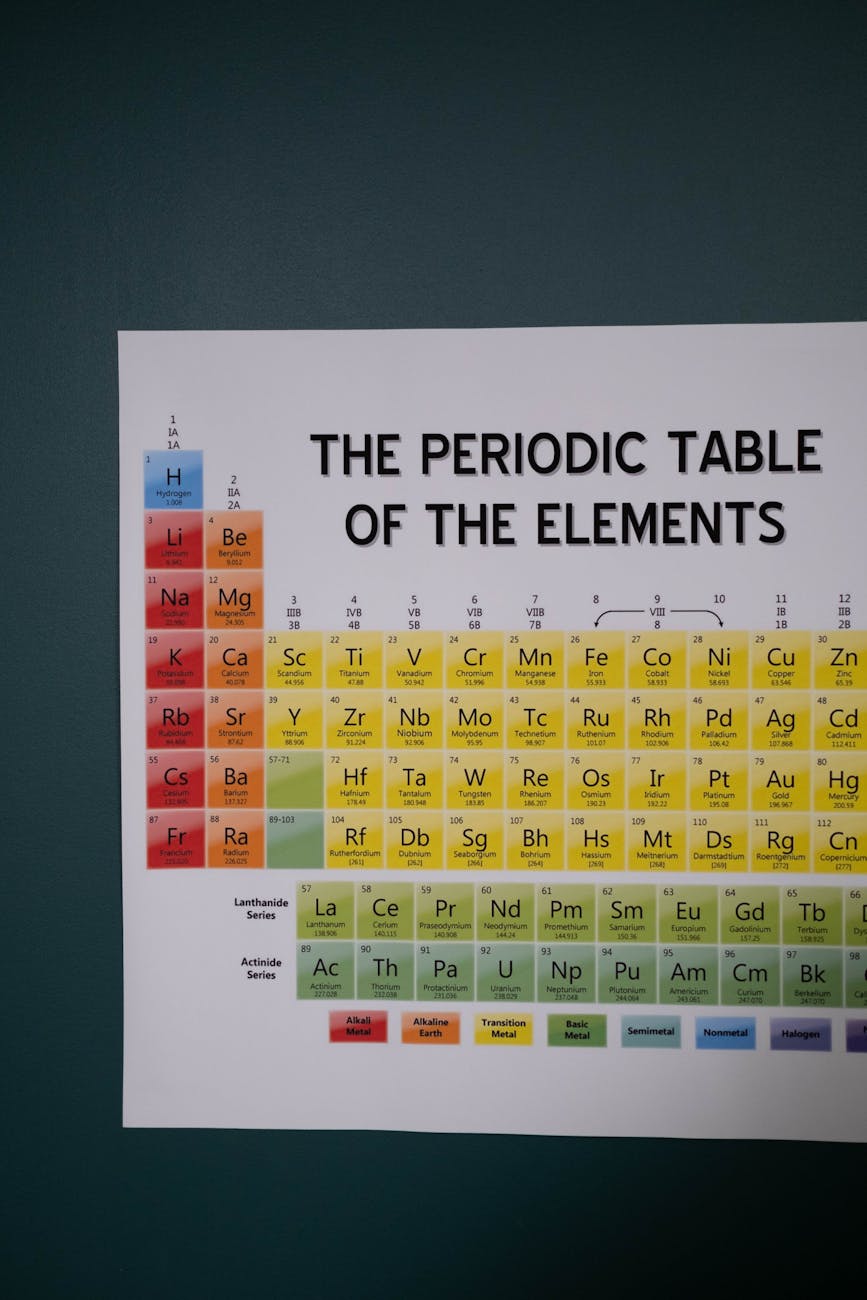
Every subject was a siege:
Math meant multi-step geometry proofs with no room for error.
Science meant memorizing the entire periodic table, not just the elements but their atomic numbers, valencies, and bonding patterns.
Chinese literature meant deciphering Confucian texts, classical essays, and Tang poems written in ancient syntax that had nothing to do with how we spoke today.
And then there was English.
I had never seen English words before, never heard how they were supposed to sound. While my classmates were already spelling out sentences, I didn’t even know where the alphabet started. They said “A, B, C,” like it was obvious — like they were born knowing this language.
To me, English is foreign, musical, coded noise.
I copied everything down like sacred symbols, trying to memorize the shapes and hope meaning would follow.
What shocked me even more was the sheer volume of homework.
Every single subject — math, science, Chinese literature, English, history, geography, even civics — assigned pages of written homework every day. And they weren’t optional. Every problems had to be solved, every sentence had to be copied, every definition had to be memorized.
Every day came with homework. Every day came with tests:
A pop quiz on the periodic table;
A memorization of the Analects of Confucius or an analysis of Chinese prose;
A set of geometry proofs or velocity-and-acceleration problems to solve.
Every missed assignment or every failed quiz was met with a swift swing of a bamboo cane. The academic pressure didn’t just rise — it multiplied!
So the classroom now was no longer a place of learning — it was battleground, and every exam was a bloodbath.
But back home, none of this mattered.
We were a household of illiterates — not by choice, but by history. Mother had never gone to school and could barely write her own name. Grandparents couldn’t read and understand Mandarin. In our house, education was not necessary — especially not for a girl.
Nobody cared if I had homework. Nobody checked if I had exams coming up.
If I scored 100, it meant nothing. If I forgot to turn in an assignment, it meant nothing. But if I missed my janitorial shift or didn’t meet my sewing quotas — that meant something.
To my family, knowledge didn’t put food on the table but my hands did. So they always made sure my hands were doing their job.
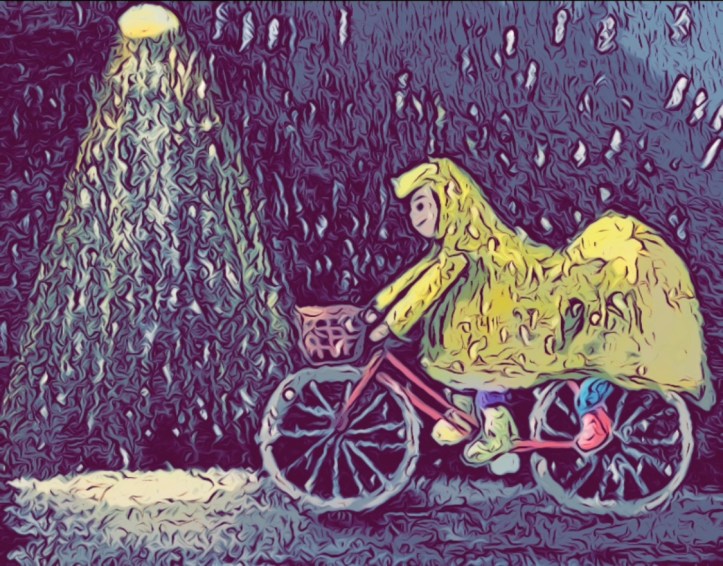
骨折後的鎖骨,
在日夜勞動下,
一直沒法痊癒,
右肩總是隱隱作痛。
遇到颳風下雨,
痛得更是厲害。
下雨的清晨要出門工作,
格外煎熬。

「冷冷的冰雨在我臉上胡亂地拍,
暖暖的眼淚跟寒雨混成一塊」,
完全是在唱著我苦痛的心聲。
                                        sketch by Ayima
My early mornings and nights were packed with work. While my classmates biked to cram schools after class, I biked to Suzuki factory. My broken collarbone never had a chance to heal. Months had passed since the injury, but the pain lingered, dull and stubborn, flaring up whenever the wind blew or the rain came.
Rainy mornings in cold days were the hardest. While others were still in bed, I’d be out for the morning shift in the bitter cold. My right shoulder aching with every step. Cold rain hitting my face like slaps and warm tears mixing in with the chill. It was the sound of my body and soul, crying out together.
But I knew one thing for sure: in this new environment, I had to prove myself. I had to rise to the top, not for the pride but for survival.
Only by standing out could I beg for leftovers from the classmates — doing my job as a good guard dog. If I didn’t, I’d become a joke. And every day at school would be another kind of punishment.
So I traded the only resource I had left — sleep — for a fragile thread of dignity.
After the night shift from the factory, I would stay up alone past 10PM, studying under a dim light, wrestling with exhaustion. But the results were limited.
Waking up before 4AM for physical labor left my body drained. Past midnight, the words on the page blurred into dancing shadows and sometimes I jolted awake with the pen still in my hand. I had to pinch myself just to stay awake. Still, it never lasted long. Four hours a day of sleep wasn’t nearly enough. My body was fraying at the edges, like a lamp running out of oil. I had to find another way.
I realized in this brutal middle school world, intelligence wasn’t enough. I needed stamina. I needed structure. I had to turn every spare second into a weapon. Because this was a survival game.
If I slowed down for even a day, I’d fall behind — and the system did not wait for the fallen. Eventually, I devised a survival hack: squeezing brilliance out of crumbs of time.
I made flashcards during class — filled with English vocabulary, Chinese poems, the periodic table or textbook passages. These cards became my secret companions, tucked into my pockets as I swept the floors, scrubbed the toilets, and walking to school.
Whenever my body was busy but my mind free, I’d pull out a card and recite. Those were the moments when ancient voices kept me company: Tao Yuanming with his quiet wisdom, Li Bai and Du Fu drifting through the air like echoes from the golden age of poetry.
拖把拖曳著「兒時記趣」,
掃把輕輕理出「桂花雨」。
 在「陋室銘」中刷東圊,
在辦公桌上拭「夏夜」。
我揮手窗櫺,
便再別了「康橋」下的波光艷影。
My mop would hum with memories of childhood essays, my broom would trace the outlines of autumn rains. As I wiped desks and windows, I whispered farewell to the imagined river under moonlit bridges.
Learning slipped in between labor, gently and persistently — like sunlight threading its way through dust.
Months later, in a class full of overachievers, I somehow broke through the siege. I clawed my way back to the top. With that, my “leftover-collecting business” resumed in full force.
I learned a truth that stayed with me for life: Survival is not just about working hard. It is about breaking through the siege — with strategy, with courage, with an unyielding will to keep moving.
Soul Whisper:
I wasn’t the brightest, the strongest, or the most prepared. I was just a girl with tired hands and a stubborn mind, gathering knowledge from the cracks of each day.

Some grow under sunlight. I grew under pressure — between labor and silence, between pain and hunger. I didn’t study to outshine anyone. I studied because failure was too expensive.

Being first was never about glory. It was a strategy.

If I stood at the top, I could remain useful — the dependable one, the disciplined one, the one teachers praised. That position gave me access to what others discarded — the leftovers that would have gone to waste. Each portion of leftovers I gathered meant less chicken feed we had to buy and so a little more room for my mother to breathe.

If life wouldn’t give me space, I carved it from scraps. If no one expected anything of me, I chose to expect something of myself. So I kept walking not toward admiration, but toward usefulness, toward steadiness, toward survival with my head held high.
Chapter 13 Grandma’s Loving Lunchbox
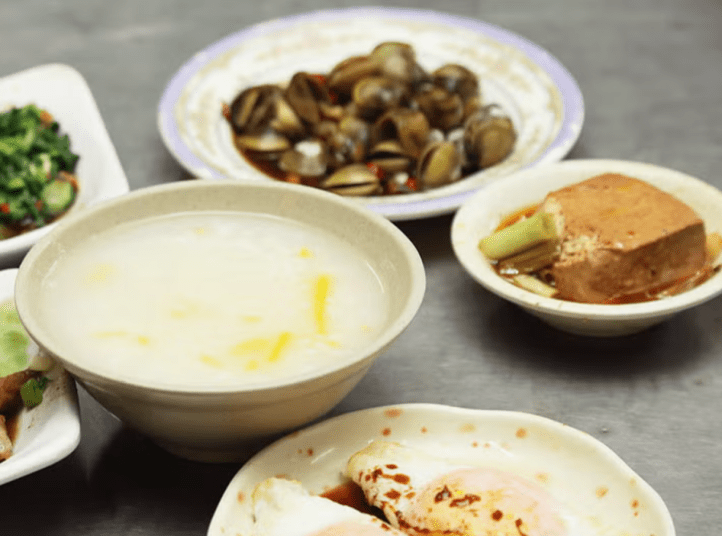
進到廚房,
餐桌上擺滿了地瓜稀飯、
醬瓜、豆腐乳,
和阿嬤做的醬漬蜆仔。

鹹香的蜆仔,
配稀飯正好,
我的肚子早已鳴聲大作。
I parked my bicycle by the front door and glanced at my watch — 6:10AM. Ten minutes late again. My breath steamed in the winter air.
The winter solstice had passed. The wind was stronger today, and the fallen leaves — more than usual — took longer to sweep from the stairs. It looked like, for the next month or two, I’d have to leave 15 minutes earlier. Out the door by 4AM.
I stepped into the kitchen. On the table: sweet potato porridge, a few pickled vegetables, fermented tofu, and marinated clams — Grandma’s specialty — salty and savory, they paired perfectly with the porridge. My stomach had been growling long before I walked in.
“Granny, I’m back. I’m starving."
By the corner of the dining table sat a metal lunch box. Inside: a soy-braised chicken thigh, a slice of omelet, and stir-fried cabbage. It looked delicious.
I glanced at my watch again — 6:15. No more dawdling! If I didn’t leave home by 6:30, there was no way I’d make it to school by 7AM. And that meant one thing: squat punishment — a full-on workout for my thighs.
I quickly scooped a bowl of porridge and set it on the table to cool down. Then, sprinted to my room — changed into my school uniform in two minutes, grabbed my backpack, and dashed back to the kitchen. I passed by my brother’s bedroom. He was still in bed, warm under his blanket.
Back at the table, I didn’t have time to care if the porridge was still hot. I picked up the bowl and poured half of it straight into my mouth. Then hurriedly grabbed a small pot, filled it with water, set it on the gas stove, and turned on the flame.
I returned to the table, grabbed a few slices of pickled vegetables, and poured another half bowl of porridge into my mouth. I didn’t even feel the heat anymore — there was no time to feel anything and I had to hurry. Then I rushed to the fridge — took out an egg, a handful of baby bok choy, and a stalk of celery. Washed, chopped, tossed them into the pot.
Back at the table, I scooped another bowl of porridge, picked up a piece of fermented tofu, mashed it into the porridge, and slurped it all down to my stomach.
I walked quickly to the cupboard, grabbed my lunch box, filled the box with a layer of rice, and set it back on the table. Then I returned to the stove. Bok choy was boiling furiously. I tossed in a big pinch of salt, beat the egg and poured it into the pot — then turned off the heat.
Finally, I drained the soup, tipped the cooked bok choy and egg into the lunch box, added a few slices of pickled veggies, and snapped the lid shut. Breakfast eaten, lunch box made, school-bound. All in under fifteen minutes!
“Granny, I’m off to school!" I called out before heading out the door.
This kind of military-style morning routine was just another day in my middle school life. As for Grandma’s loving lunches — they were a kindness I never got to enjoy.
Grandma, as I remember her, lived without much display of joy or anger — just quietly going about her days, faithfully preparing three meals and taking care of Grandpa, who had been in a wheelchair for years. The only person who ever seemed to spark real joy in her was my older brother.
Both Grandpa and Grandma were born before World War II, during the Japanese colonization, when they were considered second-class citizens. They lived through war, through the retreat of the Chinese government to Taiwan. Two small lives caught in the undercurrent of history. Nothing came easy. Everything had to be clawed from the edge of survival.
They had given birth to eight children. The children came in haste, only to return, one after another, to dust — no names engraved. No trace of their lives was kept. Only my mother survived. And so, I came into their world still echoing with ghosts they dared not name.
The grief of losing children — at first, perhaps, it shattered the heart. But over time, as the wound healed and tore, again and again, the heart could only sever feeling from itself, until it learned to beat — numb, and without memory of pain.
I saw, in the dryness of her eyes and the deep furrows time had left on her face, the buried sorrow she never spoke of. Perhaps the quiet wound she carried all her life was not having a son to continue the family line.
他們生養過八個孩子。
孩子們來得匆匆,
卻接二連三地歸於塵土,化作春泥,
連牌位也沒有,
僅養活了我母親。

喪子之痛,初時也許撕心裂肺。
而心,在傷口一次次的痊癒與撕扯中,
最後也只能斬斷知覺,
終至麻木地跳動著。

在她乾澀的雙眼
與臉上一條條的歲月風霜中,
我窺探出她曾經的心酸,
沒能留下任何男丁,
或許是她一生的遺憾。
In rural Taiwan, daughters were often considered “spilled water” — destined to marry out, to belong to another household. To my grandparents, I was the “money-waster” — another mouth to feed, the expendable one. To them, only a boy could keep the family rooted.
After my brother was born, he became the center of Grandma’s world. She raised and cared for him as if he were her own son.
When Brother started kindergarten, Grandma would walk half an hour each day to the school and linger outside the fence, peeking through to make sure the teachers fed him. If he scraped a knee or felt the smallest grievance, Grandma would cradle him in her arms, soothing him with secret stashes of candy.
“Don’t you dare hit him!!” she would shout.
Whenever Brother misbehaved and Mother raised a bamboo stick, Grandma would burst out of the kitchen and shield him with her body.
However, she never had financial power of her own. So she gave in the only way she could: by saving the best bits of food for her grandson, offering love in the form of whatever was on the table — the one domain still within her reach. So the best food always ended up in Brother’s lunchbox.
Grandma rarely spoke to me. And when she did, it was to order me around: to follow her to the neighborhood creek to do the laundry, or to wash the dishes after meals. I was not a child to be cherished. I was more like a dog they kept — expected to work, to obey, and to be fed just enough …. to make sure I didn’t die.
Every morning, Brother carried to school a lunchbox heavy with Grandma’s love. I carried mine too — scraped together by my own hands. My lunchbox held rice, boiled greens, and a silence that no one in the house thought strange. In that silence, I learned to swallow hunger — not only of the body, but of the heart.
I was thirteen but I understood their resentment toward me — it came from a place of fear, a need to protect what little they had. The cruelty of poverty lies not only in the lack of resources, but in the absence of choice. Each grain hard-won, every offering weighed. Brother was their future and I was the girl who would one day leave. Everything had to be reserved for the boy in the family.
Grandma never called my name with softness. But I watched her hands — cracked, swollen, always moving. Hands that had buried too many children. Hands that had clung to survival when history swept through like a storm. She guarded love in a way she knew, because she had learned how easily it could disappear. I didn’t dwell on how she treated me — or failed to. I didn’t have the heart to hold it against her. She was just trying to survive in a life that had given her so little.
There are many kinds of hunger. Some hollow out the stomach. Others hollow out the voice. And my hunger, like many things in this house, was meant to handled alone.
Soul Whisper:
Grandma was an extraordinarily hardworking woman. Except the hours she spent eating and sleeping, she was always working — doing housework, hand-stitching garments, or collecting scraps to sell.

Her coldness toward me was never deliberate cruelty. She was a woman without any education, someone who had spent her entire life toiling with quiet diligence, surviving within the narrow framework handed down to her. She had never been taught to question, never been shown that other possibilities could exist.

In her world, girls were not seen as equals, let alone as treasures to be nurtured. A girl was a family’s appendage, destined to leave, a shadow that barely counted as a “person.” In that patriarchal generation, kindness toward daughters was not just absent — it was unthinkable. So no one wasted tenderness on girls, no one thought to invest love where it was never meant to remain.
In a house where even grains of rice had to be counted, I was the girl who learned to swallow her tears in silence. But even if no one saw my worth, I vowed to become someone of value.

Therefore, I swept leaves before dawn, stitched garments with tired hands, and filled the empty spaces where love should’ve been — with usefulness, with effort, with light. Because deep down, I held onto a fragile wish that one day, even in Grandma’s eyes, I might become more than just a burden.

So I chose to live with grace and warmth. I learned to be grateful for what is given. When faced with others’ coldness or inaction, I tried to understand and turned inward to ask what I can do instead. That understanding shaped the way I carried myself in the world: kindness is a rare currency, never to be expected, and never to be wasted.
Chapter 14 The Crimson-Stained Keys
是什麼在支撐我?我問自己。

早晚的清潔工作,
因為病倒的媽媽,工時延長,負荷加倍。
回到家後的深夜,作業堆積如山,
隔天的考試絲毫未備。
只有孤燈一盞,陪我奮戰。

我的身體,
每天吃著自己粗枝濫造的便當,
時而嘔吐連連,
或感地轉天旋。
身體對我頻頻呼喊,
求我放過他們。
他們又痛又累,
已經舉步維艱。
但我是頑固的將軍,
仍然執意要掠地攻城。
“What kind of mess is that jacket!? Zip it up! All the way!”
“Go stand in the hallway!”
My homeroom teacher’s voice lashed out, eyes fixed on my uniform jacket.
The zipper of my school jacket hung half-open. The right collar drooped lazily over the edge of my shoulder. It looked less like a student’s uniform and more like a fur stole draped over the arm of a socialite. That jacket wore me like a woman revealing a bare shoulder — coquettish, though unaware.
I didn’t say a word. Just zipped the jacket up to my chin, the collar pressing awkwardly against my throat. The teacher’s command was like an imperial decree — never to be questioned. Silently, I stepped out of the classroom. A chill drifted in with the late autumn breeze, and a sting rose quietly behind my eyes, blurring the falling leaves outside into a watercolor of sorrow.

我不敢吭聲,
默默地拉上外套拉鍊,
領子頂到了下巴,
右肩頓感不適。
師命如君令,
不可違抗,
我安靜地步出了教室。

秋風吹來,一陣涼意,
眼裏浮上一陣酸楚,
模糊了廊外的片片秋意。
If I could, I too would’ve wrapped my shoulders warm, shielding myself from the wind. Who was I to pretend?! A girl who lived on leftovers, playing dress-up in scraps of pride? Wasn’t that just asking to be mocked?
Ever since my collarbone fracture, it had gone from bad to worse — until even the weight of a jacket became too much to bear. Writing with my right hand had become a strain. On cold days, my jacket ended up draped across me like a socialite’s shawl — worn more for show than warmth.
To save what little strength I had in my right arm for playing the piano, I trained my left hand to take over. Unless a task demanded both hands, the left did it all — brushing teeth, writing homework and evaluation papers, scrubbing toilets, mopping floors. It wasn’t just a hand. It was my quiet partner in survival.
And this poor left hand — after years of scrubbing with harsh detergents — was red, peeling and cracked. When I pressed the piano keys, the skin of the hands would split open and bleed, staining my teacher’s piano with quiet apologies.
Piano lessons had turned to
                                          blood and ache,
My weary hands for a dream at stake.
Crimson-stained keys,
                    a wish still dares to wake.

如今的鋼琴課,
已經是血淚的堆疊。
雙手承著苦痛,
延續著一直以來的夢。
染血的琴鍵,
繼續奏著未完的心願。
What is it that keeps me going? I asked myself.
School was a regime of ruthless control. In the name of ‘teaching by aptitude,’ the teachers set my passing bar to ninety out of a hundred. Falling short meant a whipping with a bamboo stick, then kneeling in shame in front of the statue of Chiang Kai-shek at the school gate. The weight of schoolwork bore down like a silent avalanche — suffocating and relentless.
Because my mother had fallen ill, the cleaning shifts stretched longer — twice the hours, twice the weight. By the time I got home every day, it was almost midnight. Homework piled like a mountain. Tomorrow’s exams? Not even a glance. Only the desk lamp stood by me — my lone companion in this quiet war.
My body, day after day, fed on the clumsy lunches I threw together. The leftovers too old that food had already turned sour. Hunger left no room for hesitation so I swallowed whatever I had, even when my stomach protested with waves of nausea or head spins. My body begged me to stop — aching, dizzy, on the edge of collapse. But I was a stubborn general, still hell-bent on conquering every fortress ahead.
What was holding me up? I asked myself. Maybe it was defiance.
I refused to live a life of humiliation. Refused to be a dog they thought I am. Knowledge burnt away my shame. Music lifted my soul above the dirt. The sharp-edged, quiet fire in the chest — that’s why I couldn’t give up. I had to rise. I had to break free.
Standing alone in the hallway outside the classroom, only I knew what I was holding on to. No one understood the pursuit clenched in my hands. They didn’t get it — why I kept going when it hurt so much. Why I did not stop to rest when I was tired. My brother didn’t understand. My mother didn’t understand, nor did my piano teacher. But I did, and that was enough.
I spoke to my own body:
I know you are hurting —
but please ... hold on a little longer for me.

I can’t promise you a future,
For the future is still clouded and unknown.

Years of war, drums of strife —
I shall not rest before my mission breathes life.
Time marches on, my body worn thin,
But as long as strength remains within,
Crimson-stained keys shall strike the strings still.
As long as I stand,
this “lone horse on an ancient road”
Shall unfold beneath the solitary lamp’s chill.

我對著自己的身體喊話:
我知道你們痛,但請再為我堅持。
我無法承諾未來,因未來仍混屯不明。

烽火連年,戰鼓不息,
出師未捷,誓不休棄。

時間步步逼迫,身心皆已疲憊。
但只要還有力氣,
染紅的琴鍵,將繼續敲打鋼製的琴弦。
只要身體沒有倒下,
「古道西風瘦馬」,將繼續攤展在孤燈下。
Soul Whisper :
I was never the girl meant to be seen. Not in that jacket, not in that hallway, not in that life. But I kept standing. Every time I zipped up that jacket, tightened my jaw and stepped outside the classroom, I was telling the world — I’m still here.

The piano keys never ask for perfect hands. They only asked for presence. So I gave them everything I had — cracked and bleeding hands, even when I had no sleep, even when the world around me said I shouldn’t bother.

What held me up wasn’t glory. It wasn’t praise. It was something quieter: a promise I made to myself, with an empty stomach and trembling legs — that I would not disappear.

People saw a stubborn girl, maybe a strange one. But they didn’t see what I was protecting: my right to dream, my right to rise, even with broken wings.

I didn’t know where the road would lead. But I knew this: As long as my fingers could press a key, as long as breath stayed in my chest, I would keep walking. Even if no one clapped. Even if no one understood.
Because somewhere deep down, a quiet voice whispered:
You are not nothing.
You are becoming.
Chapter 15 Hard Is The Journey

“You got the top score of the whole school!!” A few classmates rushed over to my desk, faces lit up with excitement.
“Really?!” I asked, half happy, half in disbelief. It felt surreal.
It was the second semester of the second year of middle school. The school had organized a mock exam for students preparing for the high school entrance exam.
In Taiwan of the 90s, school wasn’t just school — it was a giant pressure cooker with the lid sealed tight. Everything revolved around the exam. Not “an” exam. The Exam.
We called it the High School Entrance Exam, but it might as well have been called the Hunger Games. One score decided our fate: which high school we entered, which university we could dream of, which jobs might someday take us seriously.
And this exam wasn’t just a test — it was a national sport, demanding everything.
We had to know by heart three years of material from every subject — Chinese, English, Math, Physics and Chemistry, History, Geography, Biology — all packed into a single weekend. It was like cramming the entire Library of Congress into our head, then being asked to restate the exact page numbers on command.
It was described as running seven marathons at once, except every finish line was another exam paper. Teachers loved reminding us: “One bad day, one careless mistake, and there goes your future!” No pressure, right?
The only extra-curricular activity after school was cram school. Nobody cared if we were good in sports or paintings. If we couldn’t solve a quadratic equation at lightning speed, we were basically “recycled material.”
So when the mock test results came out and I scored first out of one thousand students, the entire school erupted in disbelief. I had transformed from “the leftover beggar” into “academic mutant.”
I didn’t expect this result at all. I barely had time to review any of my school work. Every hour outside school was swallowed by work. Well.. I saved one hour per week for the piano.
During the test, I relied entirely on memory, pulling answers from whatever knowledge had managed to stick. This unexpected success made me wonder — what had caused this sudden leap in my ability?
I began to notice something curious. Ever since the collarbone fracture, and since I’d been forced to rely everything on my left hand, my brain had grown sharper. It was as if textbook pages were photographed and stored in my head. Studying became strangely lighter. What I had read seemed to linger longer, and during tests, the answers returned without the usual struggle.
Perhaps by training my left hand, I had awakened a different ability of my brain — the part of my brain had been quietly waiting all along. In Chinese folklore, there is a saying: when a man loses his horse, it might be a hidden blessing.
I wondered if my injury was a blessing in disguise.
After the mock exam, my literature teacher, Ms Chang, asked to speak with me.
“Have you heard of Taipei First Girls’ High School?”
“No,” I answered honestly.
“It’s the top girls’ high school in Taiwan — right next to the Presidential Palace.”
Ah, so…. the President’s neighbors….
“On the Independence Day, the students from this school march with rifles and instruments in front of the Palace with the perfect formations.”
I had never seen the parade, but I could picture it: girls spinning rifles in sync, boots polished, sunlight gleaming off military shine, right on the avenue of power.
“Taiwan’s top students all go there,” she added.
But was I a top student? Our countryside school was so tiny, nestled right next to Pushin Ranch. We were practically neighbors with the cows.
“I saw your mock exam score.” she continued. “I think you’ve got a real shot. You should give it everything you’ve got.”
Everything I’ve got?!! I was already working myself to the bone, running on empty. If I pushed any harder, I might just ascend right there on the spot — from exhaustion, not enlightenment.
“Taipei? That’s so far away! How would I even get to school there?”
“Don’t worry about that now,” Ms Chang said. “Just focus on your studies. Once you get in, then we’ll figure it out.”
Fair point. No need to plan the train ride to the future I hadn’t even earned yet.
“I’ll do my best. Thank you, Ms Chang.”
Back home, I told Mother about what Ms Chang said regarding this girls high school in Taipei. She had never heard of that school so she went to ask around at work.
One of her coworkers, Mr. Chung, quickly offered his insight.
“Don’t be silly! You think being top of some countryside school means you can get into that place?!
“My uncle’s neighbors’ daughter was top of her school too, all through middle school. She took the high school entrance exam in Taipei.”
“Guess what? She ended up in some no-name school somewhere in Taipei county. Far as hell. Now she regrets it big time! Every single day!”
“Don’t stir up this kind of trouble, I’m telling you! Your daughter is going to end up crying with no tears left!”
The more people Mother asked, the worse it got. Every answer was some version of the same message:
“It’s way too hard.”
“She won’t get in.”
“Kids from the countryside can’t compete with city kids.’
After hearing enough of those, Mother decided it was too much trouble and told me to drop this idea altogether. For the first time, I felt the invisible wall between where I was born and where I dreamed of going.
Ms Chang didn’t give up. She called our house several times.
“Education is the only thing that can change a child’s fate.”
“She is gifted. She really is. You have to let her go. Let her try.”
“Schools in Taipei are not like the ones here. They have better resources, better teachers. It’s bigger competition. Let her go out into that world. Let her compete. Her vision will expand. Her future will be different!”
Mother would always end the conversation with the same reply: ”Thank you for the concern, Ms Chang. We’ll think about it.”
And just like that, the question weather I would take the entrance exam in Taipei remained … unanswered.
Ms Chang kept trying to convince Mother to let me take the exam in Taipei. She cared about me deeply. For the Lunar New Year, she would give me a red envelope as a way of showing her support beyond the classroom.
Every winter and summer break, she asked all students to read a book and write an essay about it as vacation homework. Knowing that I probably couldn’t afford to buy books, she gave me a red envelope with the unspoken hope I’d use it for the reading assignment.
But I never got to keep it, the money. No matter where the money came from, all of it went straight to the family fund. That was the rule of the house. And so, time after time, I silently let her good intentions slip through my fingers.
Ms Change knew my family was poor, but she never knew how heavy my workload really was. For years, my winter and summer break followed the same rhythm: By days, I hunched over the sewing machine, stitching endlessly. When the sky turned dark, I switched to cleaning – scrubbing toilets that never seemed to stay clean.
Reading a book for fun? That was a luxury I couldn’t afford — not just in money, but also in time.
So when school resumed, I returned to class not only tired, but carrying a quiet guilt. Not because I didn’t want to learn, but because I never had the space to.
“A few students didn’t really read a new book over the break,” Ms Chang said in class a few weeks after school started.
“Some of you just picked a book you’d read before and wrote another essay on it to get it over with.”
Her tone was light but her eyes landed squarely on me.
“Don’t assume that just because I have whole stack of assignments to grade, I won’t remember what you’ve written before.”
“I still hope you’ll make the effort. Go read something new, something different.”
She must have finished reading our vacation assignments by then, and discovered the shortcut I took. Shame flushed through me, along with a quiet ache. How I wished I had the time — even just an hour — to sit quietly in a forgotten corner, and read a book, not for assignment, not for requirement, just … for myself.
The girls in my class were all enchanted by a red-haired girl named Anne. They would gather during recess to talk excitedly about episodes from the TV show, swapping volumes of Montgomery’s books like shared treasures.
I didn’t have time to watch the series, nor had I read the novels. But listening to them talk, eyes sparking with joy, I found myself longing to know this Anne. I wanted to understand why she was so brave and so loved. But longing was just longing. Longing alone would not bring her to me.
The last year of middle school was just around the corner and the pressure of the entrance exam loomed heavier by the day. I wasn’t sure If I was truly gifted or if the mock exam was just a moment of grace from God. Ms Chang had painted a dazzling future for me, but did I really have what it takes to chase it? And if I did, what price would I have to pay?
I’d never been to Taipei. All I knew was that it was a city of bright lights and tall buildings, a world too far from my own.
For the first time in my life, I felt uncertain about the future.
Hard is the journey,
Hard is the journey,
So many turnings,
And now where am I?

行路難,
行路難。
多歧路,
今安在?
Li Bai, my favorite Chinese poet from Tang dynasty, wrote these lines in his famous piece “Hard Is The Journey”. For centuries, they’ve captured the struggle of anyone standing at a crossroad, unsure where the next step will lead. On this day, I felt the same — my path branching before me, the way forward hidden in fog.
The next year still felt a lifetime away. Maybe I’d figure it all out later. For now, there was a geometry proof in front of me, and it wasn’t solving itself.
Soul Whisper:

I used to think talent was something distant — rare, mysterious, reserved for those who seemed to shine naturally. Now I believe that all of us carry silent gifts, waiting in the dark. Not all lights need grand awakenings. Sometimes it’s exhaustion, hunger, or heartbreak that pushes open the door. And behind it, quietly, waits the part of us that has always known the way.

My gift didn’t appear in music or paintings. It surfaced in exhaustion and sleepless nights. In the in-between moments — sweeping, stitching, walking through cold rain. And maybe that’s how it works. We don’t need to be given a chance to be brilliant — we need to survive long enough to hear what’s been inside.

So if you’ve ever felt invisible, too poor, too tired, too late — don’t believe it. You are not behind. You are becoming. And when the time comes, your soul will remember the way.
Chapter 16 Be A Better Fat Dog
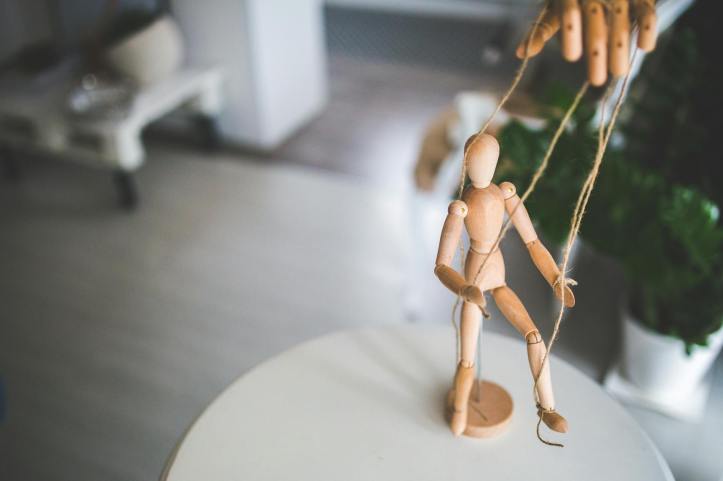
過去總是生龍活虎的他,
沒了行動能力後,
整個人就像失去了操偶師的扯線木偶,
終日了無生氣地癱坐在輪椅上。
The deadline to register for the High School Entrance Exam in Taipei was drawing near. We hadn’t made the decision yet. So Ms Chang called home again.
She spoke at length, her voice gentle but firm on the other end of the line. My mother stayed silent, not responding.
At last, Ms Chang said softly, “I’ll cover the registration fee. Let’s just put her name in.”
“If you really don’t want to let her go later, that’s fine. Nothing will be lost for you. Alright?”
Perhaps it was the long-standing care from the teacher that finally stirred something in my mother’s heart. Or maybe, it was the weight of her own regrets — the years of schooling she never had, the dreams she once tucked away and never dared to name. Now, those dreams seemed to be tiptoeing back, wearing her daughter’s shoes. Her daughter — top of the whole school — praised by the teacher as someone who might make it to the very best school of Taiwan. What kind of mother would she be if she stood in the way of that?
So at the end of that long phone call, after a silence thick enough to swallow the room, she finally sighed and said: “Alright, alright. I’ll let her go. Thank you, Ms Chang, for taking such good care of her.”
“And one more thing. Make sure she comes to the evening study sessions every night. As for the cost, don’t worry about it. I’ll speak to the other teachers and settle it down. Just let her show up.”
“These last few months are the most critical. It’s now or never — she needs to give it her all!!”
Mother fell silent again… for a long time. It wasn’t just about letting me go take the exam. This — this was a much harder decision. Because saying yes did not only mean filling out a registration form. It meant she would have to shoulder all the cleaning work at the motor factory alone, which was not possible. It meant that if I stayed late at school for evening studies, we would be giving up half our family income. For us, that wasn’t just money. It was food, rice, and the ability to keep the lights on. It was survival.
And so she sat there, the phone still warm in her hand, doing the math — not just in numbers but in aching hours and in missing dinners. The cost to believe in a future she herself had never dared to dream seemed to be quite high.
“Fine,” she said, almost like a sigh. “I’ll let her go.”
Her voice was quiet, but the weight behind it was anything but. And that may have been the single most life-altering decision in my youth. And just like that, it was settled. I would take the High School Entrance Exam in Taipei.
總是在午後,
我們會到前門跟陽光借暖,
幫阿公修剪指甲。
剪指甲的時光,
沒有對話,
只有陽光暖暖和微風徐徐。

看著那些長長的指甲,
我知道自己已經遲了。
我忙著準備聯考,
沒注意到,
指甲之約過期已久,
沒有留心到,
溫暖的陽光曾經到訪。

幫他剪指甲的胖狗,
阿公再也不需要了。
As the entrance exam drew near, every student was sprinting toward the finish line — arriving at school at 7am, and staying until 9pm. I was no exception.
About a month before the exam, during an early morning class, my homeroom teacher suddenly rushed into the classroom and pulled me aside.
“Pack your things. Go home now! Run!”
I threw on my backpack and ran all the way home. When I stepped through the door, I froze. Grandpa was lying on a straw mat in the middle of the living room. He had suffered brain death in his sleep. The doctor said he might pass within a day or two. So we took turns keeping vigil by his side. Three days later, a bit after dawn, Grandpa exhaled one final breath — and his chest never rose again.
Neighbors came and went in silence, tending to the final rites. One of them handed me a pair of white gloves and told me to dress Grandpa for his final journey.
I lifted his coarse and calloused hands — hands I had held countless times. The warmth was gone but fingernails had kept growing, wildly, as if time had carried on without permission. The moment I felt the stillness in his skin, tears rushed out of me like a flood. I was too late. I had been too late for so long.
Years ago, Grandpa fell and broke his hip. Since then, he had lived in a wheelchair — ten long years. At first, old friends still came by. They’d glance at my certificates and awards on the walls and offer polite words of praise. And Grandpa would always say, half-joking, half-resigned,
“Pig stays skinny. Dog gets fat.”
A Hakka proverb, sharp-edged, meant to say: no matter how hard you worked, life favors the wrong persons.
In his eyes, I was the fat dog — useful perhaps, but never truly one of his own.
Once so full of life, Grandpa became a marionette with severed strings the moment he lost his mobility — slumped in his wheelchair, listless, as if the soul had quietly slipped away and left the body behind.
“Ayïma, bring me some hot water,” Grandpa would often call out.
One by one, his friends faded away. Not the neighbors, not the relatives, not even those who once claimed to care. In the end, only I stayed — the girl he never truly accepted, the fat dog he never considered part of the family.
I brought him hot water, turned on the heater, switched on the TV. Comfort, such as it was, came from the one he’d never counted on. But I was there.
In the soft light of afternoon, we’d go to the front porch and borrow warmth from the sun. I’d kneel down on the floor to trim his toenails — thick and unyielding, needing awkward angles and quiet care. There was never much said between us, only the hush of stillness, the tender sweep of a breeze, the way sunlight rested gently on our shoulders.
Those moments passed like falling leaves, quiet, unspoken, and easily missed. And yet, they became the closest we ever came. The nearness I only understood after he was gone.
Looking at his overgrown nails I knew I was too late. Too busy preparing for the exam, I had let time slip past, forgot our silent pact of clippers and quiet sun. I hadn’t noticed the last warmth he’d caught. This fat dog who trimmed his nails — no longer needed.
With Grandpa’s passing, it began weeks of rituals, prayers and vigil. The coffin was placed in the living room, incense burning day and night. The smoke curled into every corner of the house, clinging to our clothes, our hair, our breath.
For three weeks, we had to take turns keeping watch. At night, we sat next the coffin, the lamplight flickering against the white mourning drapes, listening to the crackle of incense and the faint sound of crickets outside. During the day, the Taoist priests came and led ceremonies, chanting scriptures, ringing bells, guiding us through first-seven-day and second-seven-day rituals, folding paper lotus for Grandpa’s spirit.
守靈的三個禮拜,
我的日子被按了暫停鍵。
沒有教科書,
沒有工作,也沒有鋼琴。
十年來頭一次,
我的陀螺停了下來,
疲憊感如海嘯般,
鋪天蓋地而來令我窒息。
我大口地呼吸著這靜止下來的時間,
如溺水之人剛浮出水面的那一刻。
但我感謝這份靜止,
它讓我得以喘息。

或許冥冥之中他知道,
胖狗需要休息、需要吃飽,
所以阿公選在這個時刻離開。
兩袖空空的老人,
只能用離開來給予。
My daily routine was put on pause. No textbooks. No piano. No cleaning toilets. For the first time in a decade, the spinning top of my life stopped. It stopped in the thick smoke of mourning, in the silence of grief.
The fatigue from the decade’s spinning crashed over me like a wave, vast and choking. I gulped down time like air, like someone breaking the surface after nearly drowning. So I was grateful for this stillness, because in it — I could finally breathe.
Maybe, somehow, he knew. Maybe Grandpa understood that the fat dog needed rest, needed food at this very moment. He had nothing left to offer but his leaving. So he chose this moment to go — a final act of giving from hands once too empty, granting me a few warm meals, a stillness to catch my breath, a silence kinder than all the noise that came before.
Sometimes, love arrives not in what they did, but in the space they left behind for us to finally breathe.
On the day of the funeral, I thanked him. Thanked Grandpa for the pause. And I made a promise to him — two weeks from now, I’ll return to my most important battle. And I will fight with all I have. I will become a better fat dog, carrying the name he gave me, not with shame, but with grace.
Soul Whisper:
I was never anyone’s pride, never the one anyone chose. Just a ‘fat dog’ left in the corner, forgotten — but never learning how to walk away.

No one asked me to trim those hardened toenails. No one waited for a cup of warm water from my hand. But still, I knelt. I clipped away the thick layers of sorrow from him, serving in silence.

He barely spoke to me and never accepted me. I always knew that. To him, I was just a dog. And yet, still — I hoped. That maybe, just maybe, in that sliver of sunlight resting on our shoulders, in those wordless afternoons, I had come close. Close enough to say: I was here and I cared — not with words, but with quiet gesture.

I didn’t do it for his approval. I did it because when the whole world turned away from him, I could offer him a bit of warmth, even if I was a nobody, even if I was just a dog to him.

And after he was gone, I made a promise to become something more than he ever imagined I could be. Not for recognition, not for a title, but simply — to become someone whose light never fades from within. This is who I’ve become. Not in spite of it all, but because of it.
Chapter 17 Against All Odds

Inside the Exam Room, the air was thick with tension.
Sixty students sat hunched over the desks,
pen scratching like an army of tiny insects.
The only other sounds
were the steady ticking of the wall clock
and the shuffling of answer sheets.

Every cough,
every chair creak,
was a disruption that drew thirty pairs of eyes.
“A-hsiang! Congrats, huh!”
“Your daughter really nailed it….unbelievable! She’s goin’ all the way to Taipei?”
“Quiet as a mouse but eats like she got three bowls stacked!”
“She still gotta scrub toilets and sew clothes every dang day, y’know that?”
“Never seen a kid like her. Don’t look like much, but tops every exam! Aren’t that somethin’?”
The day my entrance exam result came in, the whole village lit up like it was festival time. I never thought my name would one day be passed from mouth to mouth like some kind of legend. Not since Grandpa died had the house felt this loud, this alive. Voices flew from every direction, everyone talking over each other. After all, no one from our village had ever made it into the best high school in Taiwan. In fact, no one in the village believed I could make it.
A month before the High School Entrance Exam — the most important exam of my life — I wasn’t in the classroom, wasn’t by my desk. I was at Grandpa’s vigil.
Grandpa had passed away, and by tradition, we had to keep vigil by Grandpa’s coffin for three weeks. Incense had to keep burning day and night. The Taoist priests came and went, chanting rituals, leading us through bows and prayers. At night, we took turns kneeling by the coffin, making sure the incense never went out.
While all my classmates were racing through practice tests, I was folding paper flowers for Grandpa’s soul. While they memorized formulas, I was kneeling before the altar, whispering prayers I barely understood.
Neighbors came to the funeral, murmuring that fate had already sealed my path. “What a bad luck… three weeks before the exam?!” “She won’t make it now.”
Teachers and classmates didn’t say it out loud, but I could also see it in their eyes: She’s done for.
In a world where every minute of study was counted like gold, losing three weeks was not just unfortunate — it was fatal. The pity in Ms Chang’s glances spoke the same verdict.
That month, as if fate hadn’t tested me enough, I caught a stubborn cold. The cough clung to me for more than two months.
On the first day of the exam, I stumbled out of the exam-room with my throat raw from holding back coughs. Inside the room, the air was thick with tension. Sixty students sat hunched over the desks, pen scratching like an army of tiny insects. The only other sounds were the steady ticking of the wall clock and the shuffling of answer sheets. Every cough, every chair creak, was a disruption that drew thirty pairs of eyes.
I pressed my lips together, chest aching, forcing the cough down again and again. I’d rather suffocate quietly than be remembered as the girl who ruined dozens futures with her cough.
On the street of Taipei, I wandered like a stranger in a foreign land. My body screamed for rest, but I had to find a clinic. When I finally found one, the doctor barely glanced at me before having the nurse hand over vials of cough medicine. I clutched them like treasures.
I walked out of the exam-room into the corridor.
Sunlight poured in,
sharp and almost blinding.

In that instant, I thought —
whatever the outcome,
at least I had given everything I could.
That night, Mother had arranged a place for me to stay — a former coworker of hers, married and moved to Taipei years ago, with a baby barely two month old. I spread a blanket on their living room sofa, trying to get as much rest as I could.
But sleep never came. The baby woke, wailed, fed, slept, then wailed again. Each time, the baby’s cry pierced through the thin walls, slicing my half-dreams into tatters. I lay there, stiff, afraid to move, afraid to cough, listening to the newborn announce his hunger to the universe while I starved for silence.
By dawn, I was more ghost than girl. My body trembled from fever, my eyes burned from sleeplessness, and my lungs still rattled like broken bellows. And yet, the second day of the exam awaited — merciless, immovable.
I rose from the sofa, smoothed the blanket as if that could erase the night, and shouldered my bag. Outside, the city was already awake, indifferent to my war. Inside, I whispered to myself: Hold the line. One more day. Just hold the line.
Though my body was worn down by coughing and sleepless nights, my mind was strangely clear. Every question on the exam seemed to be waiting for me, as if it had already been written inside me long ago — all I had to do was reach out and take it.
When I set down my pen, there was no joy, no triumph. Only a stillness, deep and quiet, as though all the pain, pressure, and noise had stepped aside for a moment, leaving me alone with silence.
I walked out of the exam-room into the corridor. Sunlight poured in, sharp and almost blinding. In that instant, I thought — whatever the outcome, at least I had given everything I could.
Back home, with weeks of lost study time, fever, and relentless coughing, Mother thought my chance was gone. Taipei First Girls, after all, was not a school for just anyone.
Yet, against all odds, my scores soared far above the admission line for Taipei First Girls’ High School.
The day I received the score card, the news exploded in our village like firecrackers at New Year. Neighbors poured in from every direction, shouting congratulations as if it were their own daughter who had made it.
“Unbelievable! From our little village!?”
“Taipei First Girls, huh! A-Hsiang! Your girl really did it! ”
“I knew she was different! Look at her now!”
“We still ain’t sure if she’s going. Taipei’s real far,” Mother said.
The commute alone would take hours, and renting a room in the city? That would cost even more. Mother hesitated, not knowing how we could afford it.
“She got in and y’all thinkin’ ‘bout not lettin’ her go? That’d be plain foolish! Let the girl go!”
“Let her go! Let her go!” the neighbors echoed one after another.
Most of them probably had no real idea what kind of school Taipei First Girls was. But they’d heard it was the best so that was enough. Not sending me would’ve seemed like the biggest mistake in the world.
They kept talking all morning, filling the house with a kind of noisy warmth we hadn’t felt in years.
I stood there, surrounded by voices that rose and fell like festival drums. They cheered as if my victory belonged to them too, as if one child’s leap had lifted the whole village. But under the warmth, I felt a quiet dissonance. These were the same neighbors who, when Grandpa broke his hip, had turned away. Now they came to share the glory.
A few days later, Auntie A-Tzu came by with an envelope. Inside was a collection of donations from neighbors — money they had pooled together to help send me to Taipei for school.
Mother took the envelope and asked me to bow and thank everyone who had come that day.
After they left, she turned to me and said, “These here, this ain’t just money. It’s what we borrowed from those folks today. You have to remember, one day we gotta pay every bit of it back.”
“Write down all their names in this notebook. I’m gonna keep it right here under the telephone. Don’t you ever forget it.”
Then she continued, “It’s easy to give when things are going well. Real help, the kind that shows up in the snow, that’s rare.”
“We’ve struggled for so many years … don’t think the neighbors didn’t see it. When your grandpa needed a surgery, I dragged you two around, kneeling and begging for help. Not a single soul came through for us.”
“These donations now?! They’re just folks adding flowers to brocade. Like red and white envelopes — you give some, you take some. That’s how it works.”
She told me to remember it well.
That night, I sat alone by my desk, staring at the notebook where I had written down every donor’s name. The ink looked heavy, like the weight of a hundred debts pressing into the thin paper.
I traced the names with my finger and told myself: One day, I will repay every one of you. Not only with money, but with a life worth living.
The village cheered as if victory was theirs, but in the quiet of my room, I knew real war was still mine to fight.
I had crossed too many nights,
Too many graves, too many fights,
Too many thresholds torn with pain —
Yet still I rose,
again and again.

Against all odds, I held the line,
A broken body, a will still mine.
Against all odds, I dared to dream,
Though the world cut sharper than it seemed.

Against all odds, I had survived.
Against all odds, I am alive.
Chapter 18 The Most Delicious Pizza
The high school assignment registration — what we called “the tearing of the list” — is a system unlike anything outsiders could imagine. Futures were torn from the wall, one slip at a time.
Passing the exam didn’t automatically tell you where you would go. You had to show up in person on the registration day, stand in line with thousands of other students, and when your number was called, shout the name of the school you wanted. Only then would a staff member tear the slip off the list and hand it to you. That is the moment you knew what school you could go to.
Every name torn off the board meant one seat gone forever. By the end of the day, the wall would tell a story: some lists ragged with missing slips, others untouched, left for those with few choices. The whole process could last two to three days.
It was a public lottery of destiny, acted out under everyone’s eyes. And so, in the same hall, you would see both tears of joy and tears of despair. Students clutching slips to their chests in triumph, and others staring blankly as if the world had just ended.
On the assignment registration day, Ms Chang took me from Zhongli to Taipei early in the morning. The registration took place at Taipei First Girls’ High School.
It was rush hour and the highway was packed. In the bus, she kept chanting under her breath, over and over,
“Bodhisattva, please help us. Help us make it, help us make it in time.”
As soon as we got off the bus in Taipei station, she flagged down a taxi and rushed us straight to Taipei First Girls. When we arrived, the place was swarming with people. Students, parents, teachers — all packed into the courtyards, corridors like pilgrims at a sacred shrine.
She grabbed my hand and squeezed us through the crowd, calling out,
“Excuse us, please, please! We’re late for our time slot!”
After pushing through the wall of people, we finally reached the volunteer desk. A student in a green uniform checked my placement slip and gasped
“Your group started a while ago! Come with me — hurry!!”
I sprinted after her, chasing one volunteer after another — through long corridors, past crowds, up staircases. My head spun from the rush. When we reached the main hall, the rows of boards stretched before us like a giant scorecards of fate.
The list for Taipei First Girls was already scarred — slip after slip torn away. Taipei First Girls had already reached number 614, which meant six hundred and thirteen students had already chosen this school. Other schools’ lists still hung pristine, untouched, waiting.
I had already missed my assigned time slot.
A staff quickly pulled me to the front of the line.
“Which school?” she asked.
I steadied my breath and said, quietly but firmly:
“Taipei First Girls”
She immediately called out, loud and clear: “Taipei First Girls’ High School!”
The green slip marked “Taipei First Girls’ 614” was pulled from the wall and handed to me.
After that, I no longer remember how I walked out of the hall, or how I found Ms Chang. The next thing I knew, she was running toward me, eyes shining, and pulled me into a hug.
“I saw you on the screen, pulling the slip for Taipei First Girls’. I was so, so happy,” she said.
“I was terrified you might miss it. I didn’t know how I’d face your mother if you didn’t get in just because we were late.”
I felt like I was floating, weightless. I just kept smiling at her — dazed, giddy, like I didn’t quite know where I was.
午餐時間,
老師帶我去比大營,
品嚐我從未吃過的美食。
沙拉、炸雞、比薩、濃湯與水果,
樣樣精緻豐盛,
好像置身在夢中。

咬下第一口比薩時,
我瞬間有點鼻酸。
想著半年前的自己,
每天為三餐奔波,
根本不知道自己有什麼未來。
手上清潔劑蝕刻過的傷痕,
還隱隱地對我訴說著它們經年的傷痛。

那天,是我人生中第一次被允許吃到飽。
At lunchtime, Ms Chang took me to Pizza Inn — a place I’d never been — to taste a kind of meal I had never known before. Stepping inside, the air was thick with the scent of melted cheese and toasted dough, a fragrance so opulent it made my dizzy.
I stood frozen before the buffet spread. Golden fried chicken piled high, pizza with crusts so thick and toppings so colorful they looked like paintings, creamy soup that swirled with the promise of silk , and lots of fresh salad and fruit.
“All you can eat,” Ms Chang said softly.
I stared at the plates, my hands trembling. All I can eat? The concept felt illicit. In my world, food was a calculated ration, a survival sum where every bite was measured against the hunger of tomorrow. I looked at the mounds of fresh fruit and the overflowing plates, and a sudden, sharp doubt pierced my chest. Am I truly allowed to touch this? Can I really eat anything I want?
Each dish felt so rich, so heavy with abundance. It was like I had stepped into someone else’s dream. I reached out for a slice of pizza, my movements slow and hesitant. I was afraid if I moved too fast, the entire scene might dissolve into mist.
Just a few months ago, I had been running day and night to put food on the table. I had no idea what kind of future awaited me. My world had been just “not enough” — not enough money, not enough time, not enough hope.
As I picked up a piece of fried chicken, the scars on my hands— those rough, darkened patches etched by years of harsh cleaning chemicals— seemed to pulse in the bright light of the restaurant. They whispered their quiet, stinging pain, a reminder of the toilets I had scrubbed and the floors I had mopped to earn a single bowl of thin porridge.
Looking at those scarred hands, I felt a wave of nausea mixed with wonder. Do I really belong here?
I took my first bite, my eyes blurring. It tasted like a boundary being broken. It tasted like the very first time the world had ever said “YES” to me.
After we had eaten to our hearts’ content, Ms Chang smiled and said, “This is where I leave you. From here on, the road is long, and it’s yours to walk. Do your best.”
And I knew then — from the moment on, I could no longer rely on anyone else to pull me forward.
That day’s pizza was the most delicious I’ve ever had. It was topped with drive and hope for the future, layered with deep gratitude for my teacher, and seasoned with a kind of happiness I had never known before.
A few weeks later, the little frog at the bottom of the well — carrying with her the blessings of her teacher and her village — leapt out of the water for the very first time, off to explore a strange and distant city, all on her own.
Soul Whisper:
Sometimes, the world doesn’t give you wings — it gives you a meal. Not grand, not loud, but enough. Enough to tell a hungry soul, “You are seen. You matter.”

That day, I wasn’t just eating. I was being fed — with trust, with care, with a sense of belonging I didn’t know I was starving for.

Before that, my meals were always calculated. Leftovers. Chicken skin. Things no one else wanted. Often, nothing at all.

An empty stomach was something I learned to live with. I had never known what it meant to eat freely, to eat what I wanted without being beaten with a wired hanger.

And that day, I could eat anything. As much as I wanted. No one raised a voice. No one raised a hand. My eyes blurred with the first bite because I had been given permission.

That day was the first time in my life I ate until I was full. Not “less hungry.” Not “enough to survive.” But full.

Every bite of that pizza held more than flavor. It carried the weight of years spent in silence, in labor, in invisible striving. It tasted like warmth. Like a door opening. Like someone saying, “You’re ready. Go explore the world!”

And I understood. That this was no longer a moment of being lifted, but a moment of being released. From here on, I would walk on my own. Not because I had no one beside me, but because someone had loved me enough to let me go.

That pizza, to this day, remains the most delicious I’ve ever had. Because it wasn’t just food — it was flight.
 Ayïma 阿儀瑪